
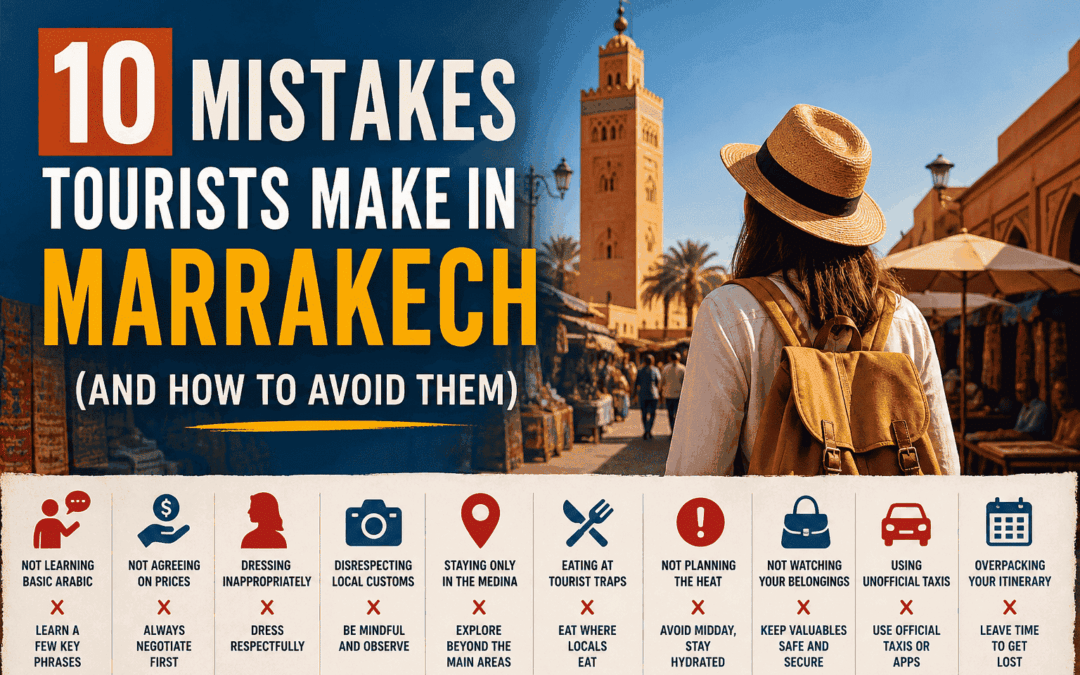
Many mistakes tourists make in Marrakech come from misunderstanding local customs and how the city works.
Marrakech hits you fast: color, noise, scooters, mint tea, music, calls to prayer, and a maze of alleyways that all look the same after ten minutes. That intensity is exactly why people love it. It is also why tourists keep repeating the same mistakes.
Here are 10 common missteps visitors make in Marrakech, plus clear ways to avoid each one so you get the magic without the meltdowns.
Common Mistakes Tourists Make in Marrakech
Mistake #1: Getting Lost in the Medina Without Preparation
A lot of people land, drop their bags, and head straight into the medina after a long flight. One hour later they are overwhelmed, dehydrated, lost, and wondering why they booked this trip.
The medina is amazing, but it is also intense: narrow lanes, scooters pushing through crowds, shopkeepers calling out, endless smells and sounds. Hitting it at full speed while tired is a recipe for culture shock.
How to avoid this mistake:
- On arrival day, start slow.
- Check in, take a shower, drink water, and rest for an hour.
- Begin with something gentle: a rooftop café with a view, a stroll through a calmer area of the medina, or a walk through a garden like Jardin Majorelle or Menara rather than jumping straight into the busiest souks.
- Plan your “deep souk exploration” for the next morning, when your mind is fresh and the sun is not at its harshest.
You will enjoy the chaos far more if you meet it on your terms, not while jet-lagged.
Mistake #2: Trusting Every “Helpful” Stranger
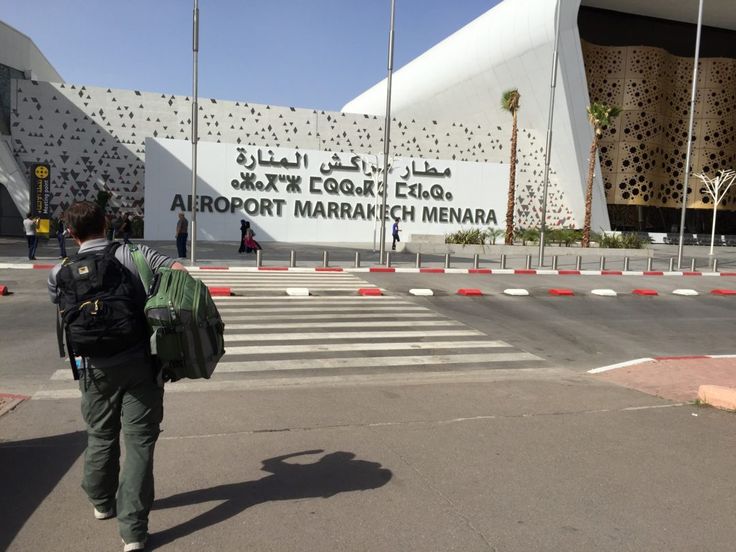
This is probably the number one complaint you hear after a first day in Marrakech: “A guy told us the road was closed and that he’d show us a different way. Then he took us around in circles and demanded money.”
There is a pattern:
- Someone tells you a street, mosque, or square is “closed” or “for prayer only.”
- They insist they are not a guide, just “helping.”
- They lead you through back alleys.
- At the end they demand a tip, sometimes aggressively.
Most of the time the place was never closed. They simply saw an opportunity.
How to avoid this mistake:
- Assume any stranger who “guides” you expects payment.
- If someone says your route is closed, keep walking confidently or ask a shopkeeper instead.
- Use an offline map (Maps.me, Google Maps offline) so you know the general direction.
- If you do want help, agree on a price first, or ask your riad to hire a licensed guide.
Polite but firm “no, thank you” and steady walking work wonders.
Mistake #3: Not Agreeing Taxi Prices Up Front
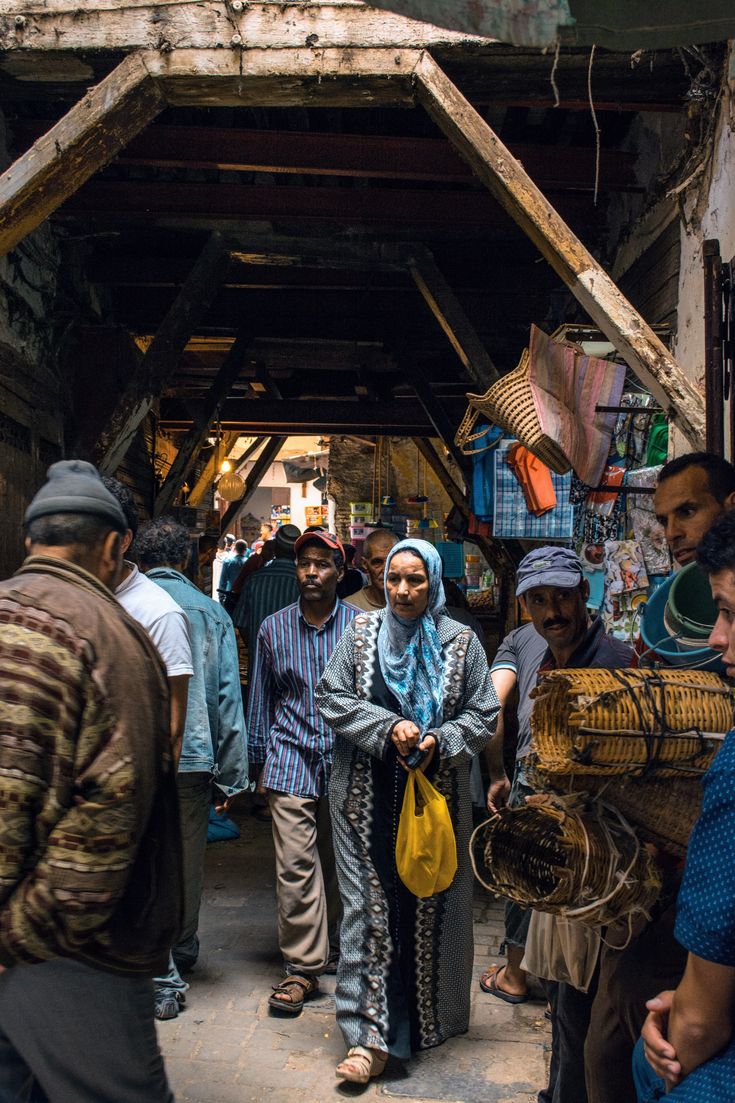
Taxi confusion is a classic frustration. Some drivers will refuse to use the meter, quote tourist rates, or “forget” the price you both mentioned at the start.
Common issues:
- Short rides suddenly become “very far” when you reach your destination.
- Evening and airport rides attract inflated prices.
- Visitors hop in without discussing anything, then argue at the end.
How to avoid this mistake:
- Before you get in, ask: “Combien?” / “Beshhal?” and confirm the price.
- If there is a meter (compteur), insist on using it: “Compteur, s’il vous plaît.”
- If the driver refuses and the price feels too high, just say no and take the next taxi. There are plenty.
- For airport runs, pre-book a transfer through your riad or hotel. The fixed price saves time and stress.
Once you get a sense of fair prices for short and medium rides, you will feel more confident and negotiations will get faster.
Mistake #4: Ignoring Local Dress Norms
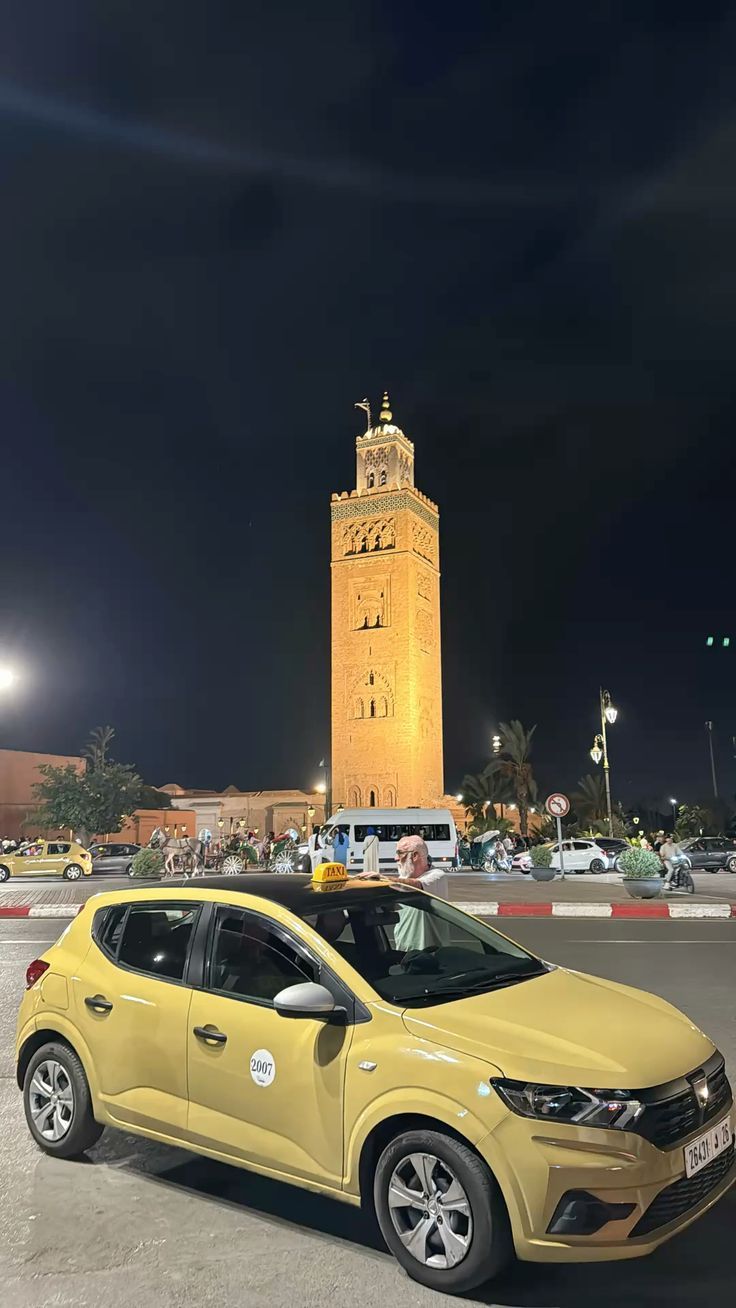
People underestimate Moroccan weather, especially in Marrakech. It can be blazing hot during the day, surprisingly cool at night, and very dry. On top of that, Morocco is a Muslim-majority country with a more conservative dress sense than many visitors are used to.
Typical mistakes:
- Wearing heavy synthetic fabrics in 35–40°C heat.
- Forgetting a hat and burning on day one.
- Dressing in very revealing clothing, then feeling uncomfortable because of stares.
- Not packing layers for cooler evenings in winter or for desert nights.
How to avoid this mistake:
- Choose light, breathable fabrics: cotton, linen, loose shirts, flowy trousers or long skirts.
- Bring a hat, sunglasses, and good sunscreen.
- Keep shoulders and knees roughly covered in more traditional areas; this is as much about your own comfort as local customs.
- Pack a light jacket or sweater for evenings from late autumn to early spring, and for desert trips year-round.
You do not need to dress in a strict way, but some modesty and climate-aware packing will make your days far more comfortable.
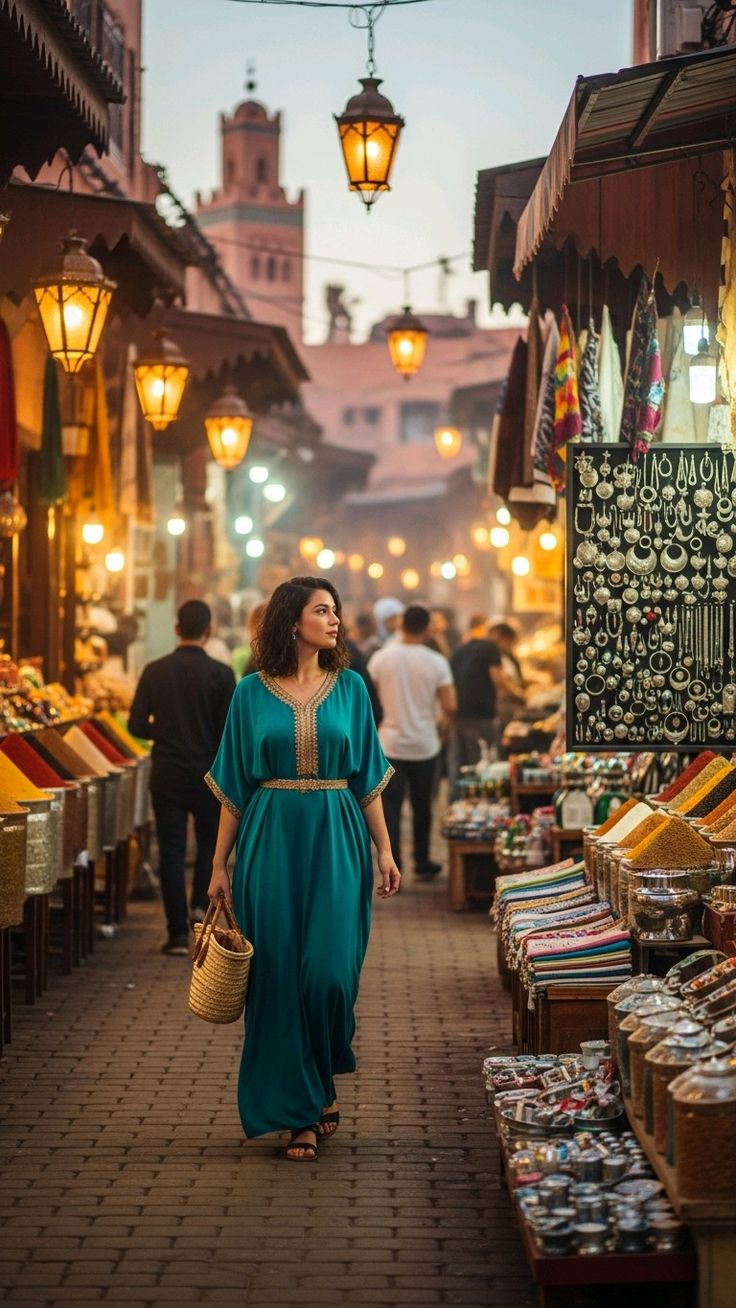
Mistake #5: Accepting Everything Without Asking Price
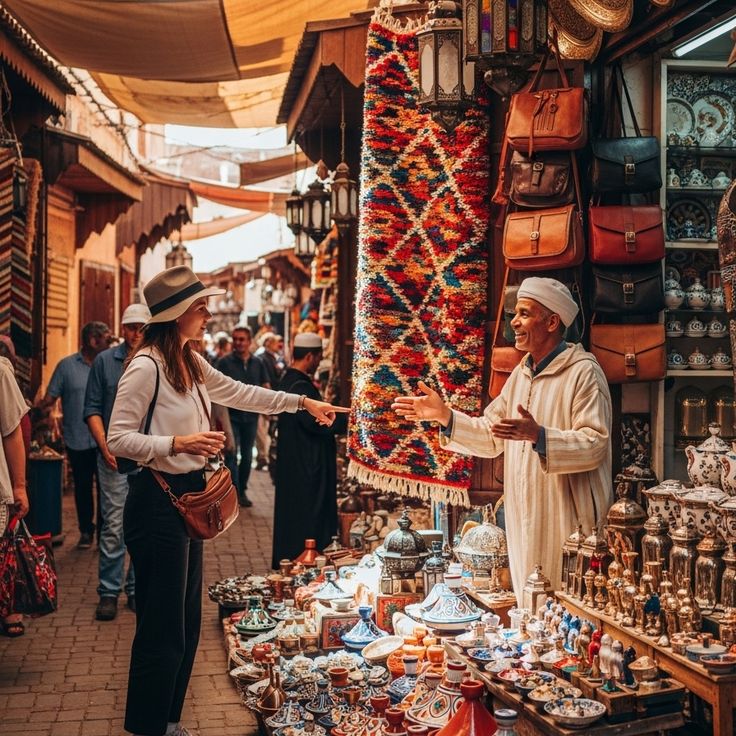
In the souks, haggling is not rude; it is normal. Many tourists either:
- Feel shy and pay the first price (often several times the usual amount), or
- Treat bargaining as a fight, become insulting, and sour the interaction.
Souk vendors expect negotiation. First prices are usually high, especially for visitors.
How to avoid this mistake:
- Take your time. Do a slow walk through the souks before you buy anything significant to see how prices roughly compare.
- Start your counter-offer around half (or even less) of the first price, always with a smile.
- Stay friendly. Laugh, shrug, and say “It is too much for me” or “My budget is smaller.”
- Be ready to walk away. Often the price drops as you start to leave. If it does not, that is fine too; not every deal is meant to be.
- Decide your own maximum price beforehand. If you reach it, pay happily and stop thinking about whether you could have gone lower.
Remember that you are bargaining with a human being, not a machine. Good humor goes a long way in making both sides feel satisfied.
Experience the Moroccan Food in Desert!
Mistake #6: Underestimating How Tiring the Medina Can Be
Marrakech’s old city is not just “a bit busy.” On weekends, holidays, or evenings, the medina can feel like an unstoppable river of people, bikes, carts, and sound. Many visitors try to power through for six or eight hours straight and end up wiped out.
Common issues:
- Getting cranky and impatient by late afternoon.
- Making poor decisions because of heat and fatigue.
- Associating the entire city with that one overwhelming stretch.
How to avoid this mistake:
- Think in “sessions” instead of full-day marathons.
For example:
– Morning souk wander + lunch + siesta at your riad.
– Late afternoon stroll + sunset on a rooftop + dinner.
- Schedule breaks in quiet places: riad courtyards, rooftop cafés, gardens, or museums.
- Drink water constantly; the dry heat drains you faster than you realize.
- Plan a hammam or spa visit halfway through your stay. It is not just a cultural experience; it is a reset button.
You will notice you have much more patience for friendly banter, bargaining, and getting a tiny bit lost if you are not physically exhausted.
Mistake #7: Assuming Every “Local Experience” Is Authentic
Certain experiences in Marrakech are heavily marketed to tourists. That is not automatically bad, but problems start when people confuse something staged for visitors with “real local life,” or pay high prices for low-quality versions.
Examples:
- Extremely touristy “Berber house visits” that are basically sales stops.
- Extremely rushed desert tours that barely scratch the surface and involve more bus time than anything else.
- Random “cooking classes” that happen in a generic space with very little cultural context.
How to avoid this mistake:
- Read recent reviews before booking any tour, class, or “experience.” Check for specifics, not just “great guide.”
- Ask your riad or trusted locals for recommendations; many work with guides and providers they know personally.
- Be skeptical of anything that is pushed very hard on the street, with little detail and “special price only right now” pressure.
- For desert tours, especially, do not just pick the absolute cheapest. Rock-bottom prices usually mean crowded minibuses, poor conditions, and rushed schedules.
Look for experiences that are smaller groups, with clear descriptions and transparency about what is included and what is not.
Mistake #8: Ignoring Local Etiquette and Photography
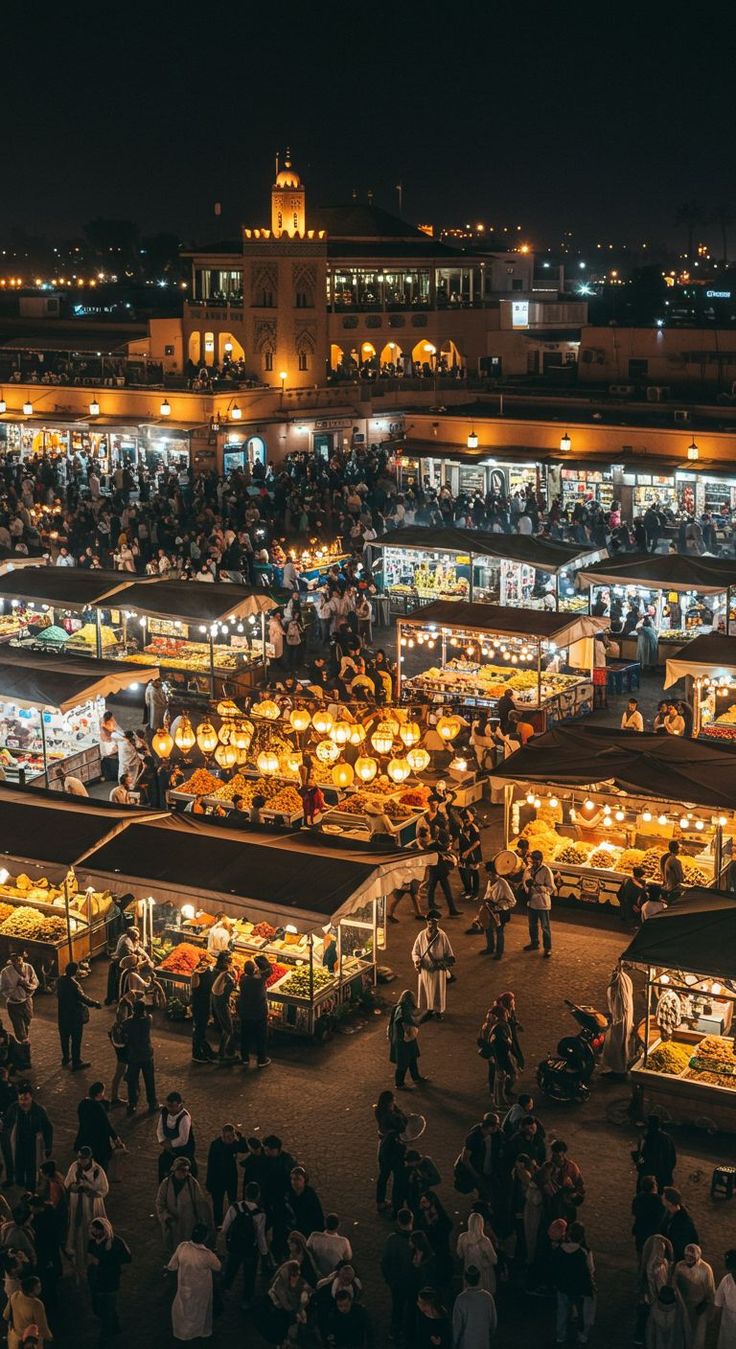
Marrakech is photogenic, no doubt. But not everything and everyone is there to be photographed without consent. Street performers on Jemaa el-Fna, snake charmers, henna artists, and ordinary locals all have different expectations.
Common mistakes:
- Taking close-up pictures of people without asking.
- Photographing performers, then refusing to pay anything.
- Taking photos of shops or crafts without buying, then reacting badly if the seller complains.
- Snapping photos in religious spaces without checking if it is allowed.
How to avoid this mistake:
- Ask first. A quick gesture toward your camera and a questioning look often does the job. Learn a simple phrase like “Photo, ok?” or in French: “Je peux prendre une photo ?”
- If you take photos of street performers or people offering a service, expect to tip. Agree on a price before you start if possible.
- In mosques and religious areas, look around: if no one else is photographing, assume that you should not either.
- Accept a “no” gracefully. Not everyone wants to be part of a travel album.
Respectful behavior keeps interactions friendly and often leads to better, more genuine pictures too.
Mistake #9: Forgetting That Marrakech Is Not Just the Medina
Many tourists never really leave the medina aside from the airport and maybe one garden. They come home thinking Marrakech is only narrow alleys and tourist-filled squares.
You miss a lot by staying in one pocket of the city.
What you might be skipping:
- Gueliz and Hivernage, the modern districts with galleries, cafés, bars, and a more local daily rhythm.
- Calm green spaces and parks where Marrakchis actually relax.
- Less touristic restaurants, bakeries, and coffee spots a bit away from the old town.
How to avoid this mistake:
- Plan at least one afternoon to explore Gueliz: walk around, sit in a modern café, browse local boutiques.
- Use a taxi or tram-like bus (if available) to reach newer areas and then explore on foot.
- Ask staff at your riad: “Where do you go on your day off to hang out or eat?” Then actually try one or two of those suggestions.
Splitting your time between old and new parts of the city gives you a fuller picture and often better value on food and shopping.
Mistake #10: Leaving All Cash, Cards, and Passport in One Place
Marrakech is not uniquely dangerous, but like any busy city with crowds and distractions, pickpocketing and petty theft can happen. The real disaster is not losing a bit of money; it is losing everything at once.
Common mistakes:
- Carrying your full cash roll, all credit cards, and passport in one bag.
- Leaving valuables loose in an open daypack on your back.
- Putting your phone in a back pocket in crowded areas.
- Keeping everything in your room without any thought for backup.
How to avoid this mistake:
- Split your money and cards. Keep one card and some cash in a secure pocket or money belt, and another card and some extra cash in your room safe or a hidden pouch in your luggage.
- Carry only what you need that day. You do not need your passport for a walk through the souks; a copy is usually enough.
- Use bags that close fully and keep them in front of you in crowds, not slung loosely behind.
- Take digital photos of your passport, ID, and travel insurance and store them in secure online storage or email.
Losing a wallet is annoying. Losing all identification plus every card at once can ruin your trip.
Turn Mistakes Into Smart Choices-How to Avoid Mistakes in Marrakech
Marrakech rewards people who are curious, flexible, and just a bit prepared. A few simple habits:
- Take it slow on your first day.
- Drink plenty of water and schedule real breaks.
- Negotiate with a smile and clear limits.
- Ask questions, read reviews, and say no when something feels wrong.
Do that, and the same city that overwhelms some visitors will feel like the most alive place you have seen in years.