

From Caftan to Djellaba: Moroccan Traditional Clothing Symbolism & Elegance
In Morocco, Moroccan traditional clothing is not just fabric. It carries memory, belief, status, modesty, and pride. It reflects climate and geography, city and countryside, religion and daily life. In places like Marrakech, Fes, Rabat, and the coastal towns, traditional garments still move through streets, homes, weddings, and religious holidays with a quiet authority that jeans and T-shirts simply do not hold.
The Symbolism of Moroccan Traditional Clothing
Two garments stand at the center of this visual language: the caftan and the djellaba
You will see them in medinas, at family gatherings, during Eid, in wedding halls, and on high streets during special occasions. To many visitors they are simply “beautiful Moroccan clothes.” To Moroccans, they are a vocabulary.
Understanding what they mean, how they are worn, and why they still matter tells you something important about Moroccan society itself.
Why Traditional Clothing Still Matters in Morocco
Moroccan traditional clothing remains an important part of identity, heritage, and everyday life.
Morocco has modern malls, international brands, and contemporary fashion scenes. Yet the caftan and djellaba have not vanished into museum glass. They coexist with Western clothes, each serving a different role.
Traditional dress matters because it:
Connects people to heritage
A djellaba in the street, or a caftan at a wedding, is a reminder that Moroccan identity did not start with recent trends. It reaches back centuries, across dynasties, trade routes, and local craftsmanship.
Expresses modesty with style
Many Moroccans care deeply about modest dress, but they do not see that as a barrier to beauty. Loose cuts, long lines, and covered silhouettes combine easily with color, embroidery, jewelry, and fine fabrics.
Marks transitions in life
Engagements, weddings, births, religious festivals, and even funerals each come with expectations around what is worn. Clothing signals respect for the moment.
Supports artisans
Traditional garments keep entire networks of tailors, weavers, embroiderers, and fabric merchants in work. This is not just about nostalgia; it is an economic reality.
Lets people shift “mode”
A person in jeans and sneakers at work can turn up in a richly embroidered caftan in the evening and signal, without a word, that the occasion has changed.
To understand Morocco, you have to read this visual code. The best place to start is with the djellaba and caftan.
The Djellaba: Everyday Modesty with Hidden Precision
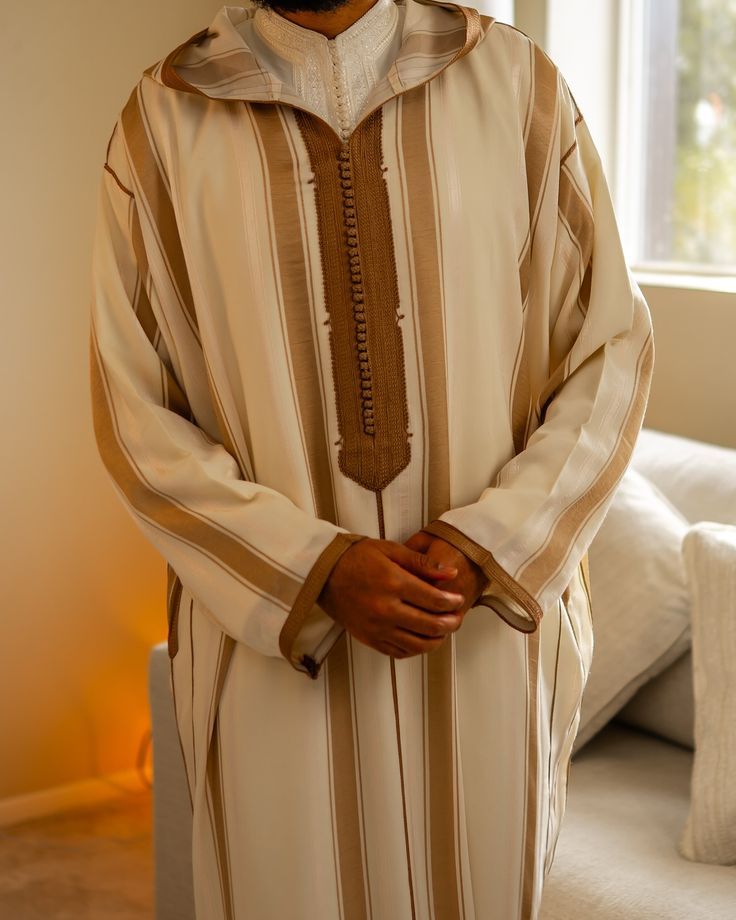
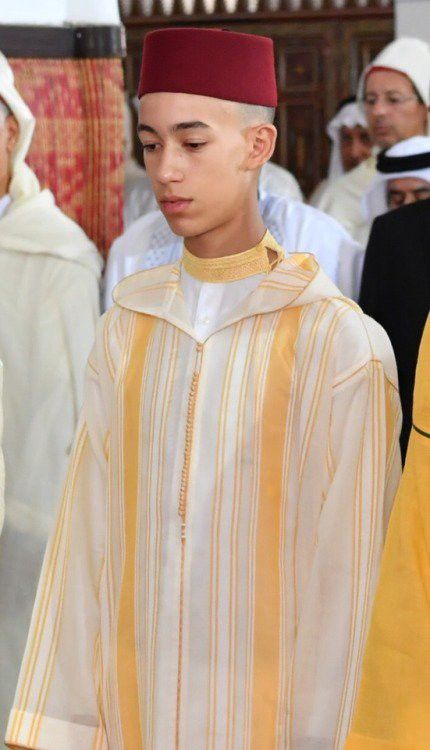
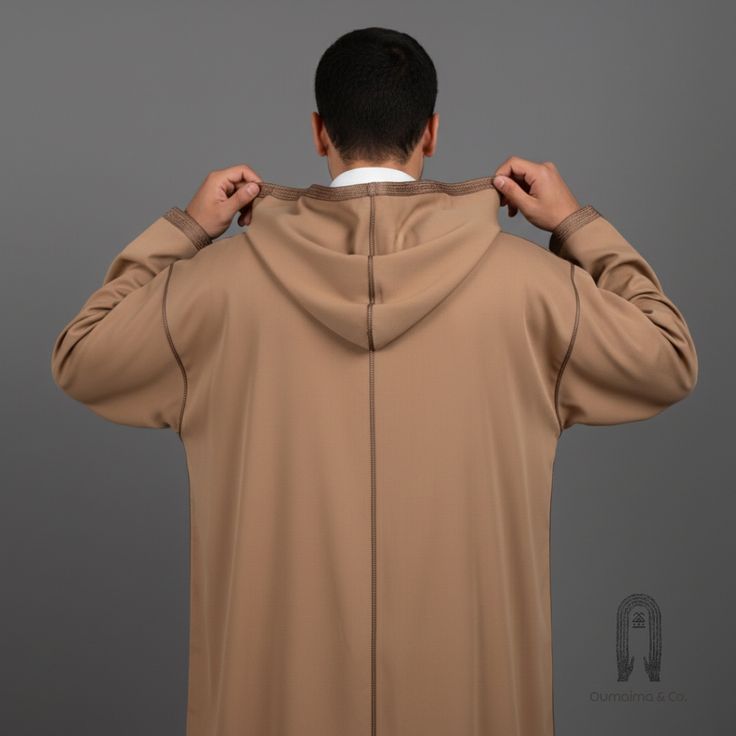
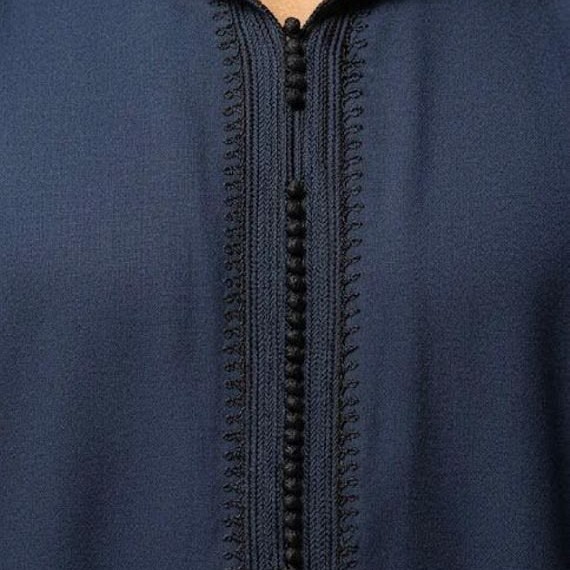
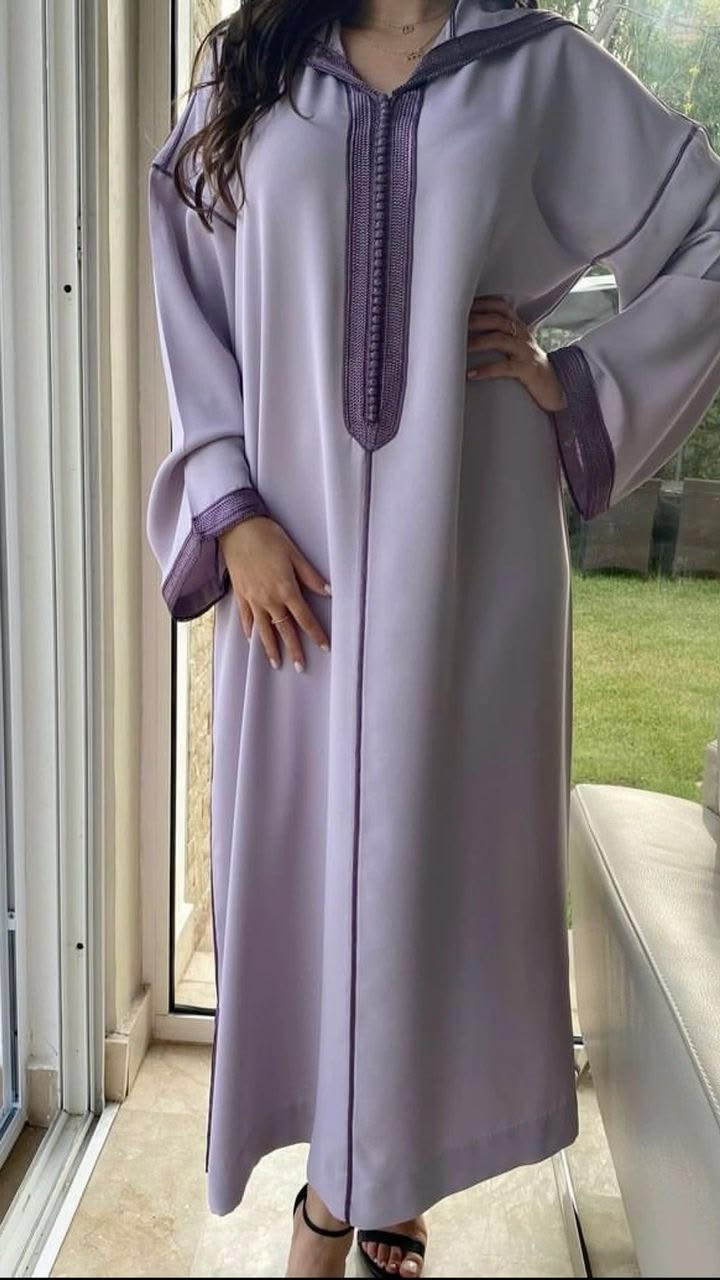
The djellaba is one of the most recognizable pieces of Moroccan traditional clothing. The djellaba is the long, loose, hooded robe worn by both men and women. It usually reaches the ankles, has long sleeves, and a pointed hood. From a distance it looks simple. Up close, the details tell another story.
Key features:
Length and cut
Straight, full length, loose enough to move in easily. This shows the garment’s function: to cover the body comfortably in public while allowing people to work, walk, and travel.
Hood (qob)
The pointed hood is not just decorative. Historically it was protected from sun, wind, rain, and cold. In the countryside or mountains, it still does. It can also provide a bit of privacy in busy spaces.
Fabric
Winter djellabas are often made from heavier wool or thick blends, especially in cooler cities and mountain regions. Summer versions come in lighter cottons or blends that breathe.
Sfifa and buttons
The decorative trim (sfifa) along the front opening and around the sleeves, plus the small handmade buttons (aakaid), show the maker’s skill and the wearer’s taste. Even a plain djellaba can be elevated by fine, precise sfifa.
Color codes and symbolism
Men’s djellabas
Often seen in neutral shades: beige, brown, grey, white, darker tones. A striped wool djellaba is a classic in colder months. White can appear around religious occasions, signaling purity and devotion.
Women’s djellabas
Range widely in color. Everyday pieces might be soft greens, blues, or neutrals. For celebrations, you will see deeper jewel tones, embroidery, and more playful hues. Color becomes a tool to express mood, age, region, and sometimes family taste.
Urban vs rural nuances
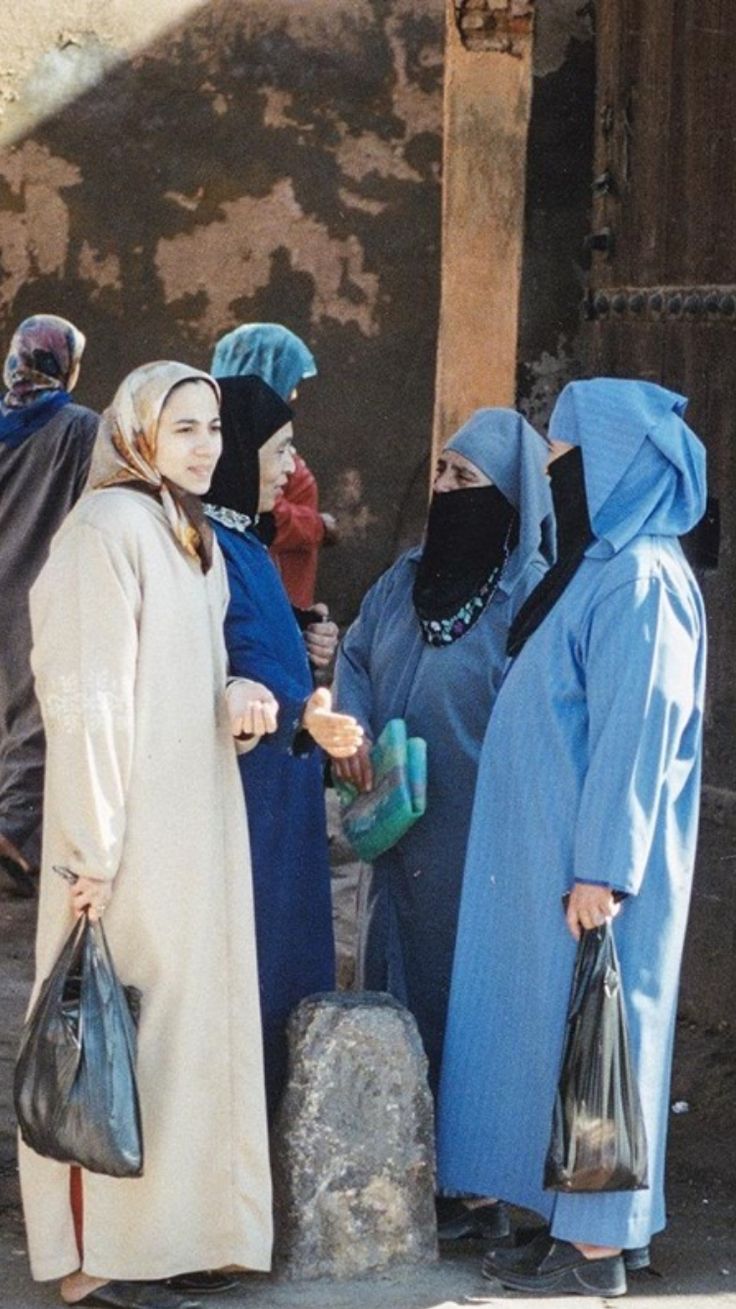
In cities like Marrakech or Casablanca, you might see djellabas paired with heels, sneakers, designer bags, or modern sunglasses. The garment blends into a contemporary wardrobe.
In rural areas and smaller towns, the djellaba can appear more traditional in fabric and cut, used as a practical outer layer in fields, markets, and village streets.
Symbolically, the djellaba tells you:
This person is rooted in local customs.
They value modesty in public spaces.
They recognize the shared social language of traditional dress.
Even when jeans sit underneath, the outer form sends a clear signal about identity.
The Caftan: Ceremony, Femininity, and Status
The caftan represents the elegance and ceremony of Moroccan traditional clothing.
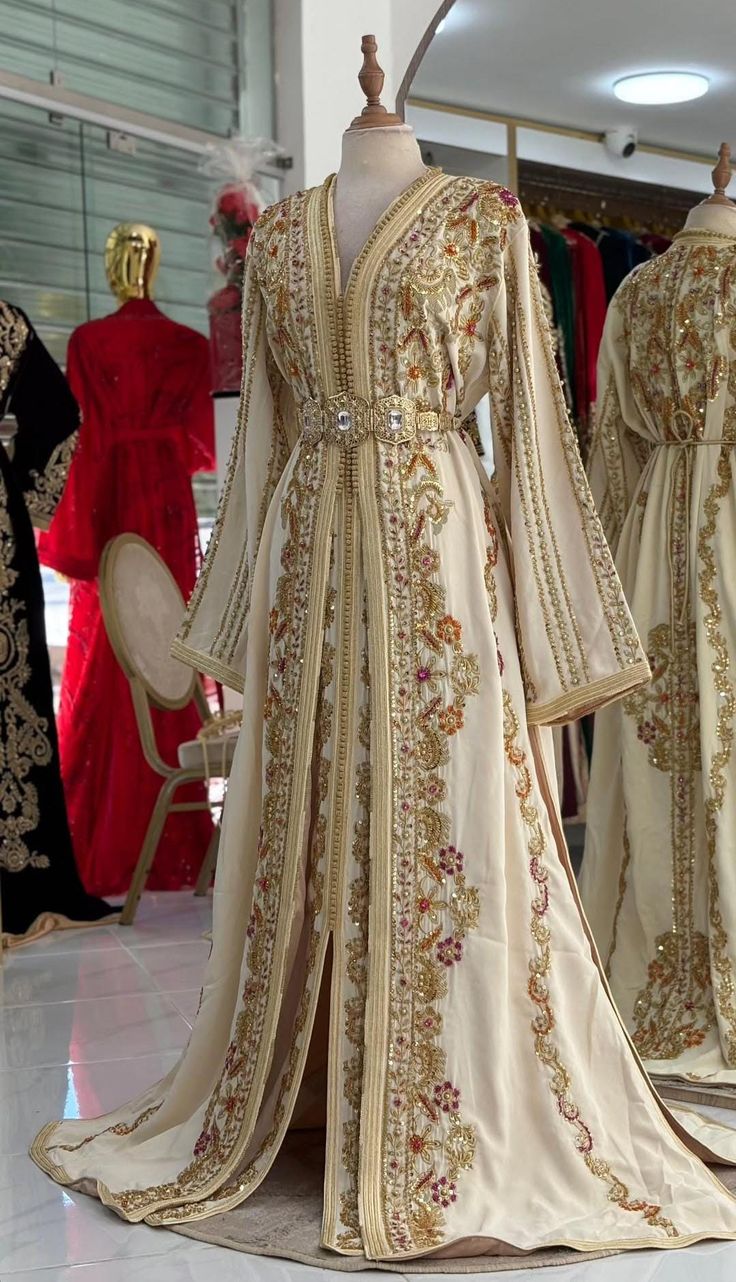
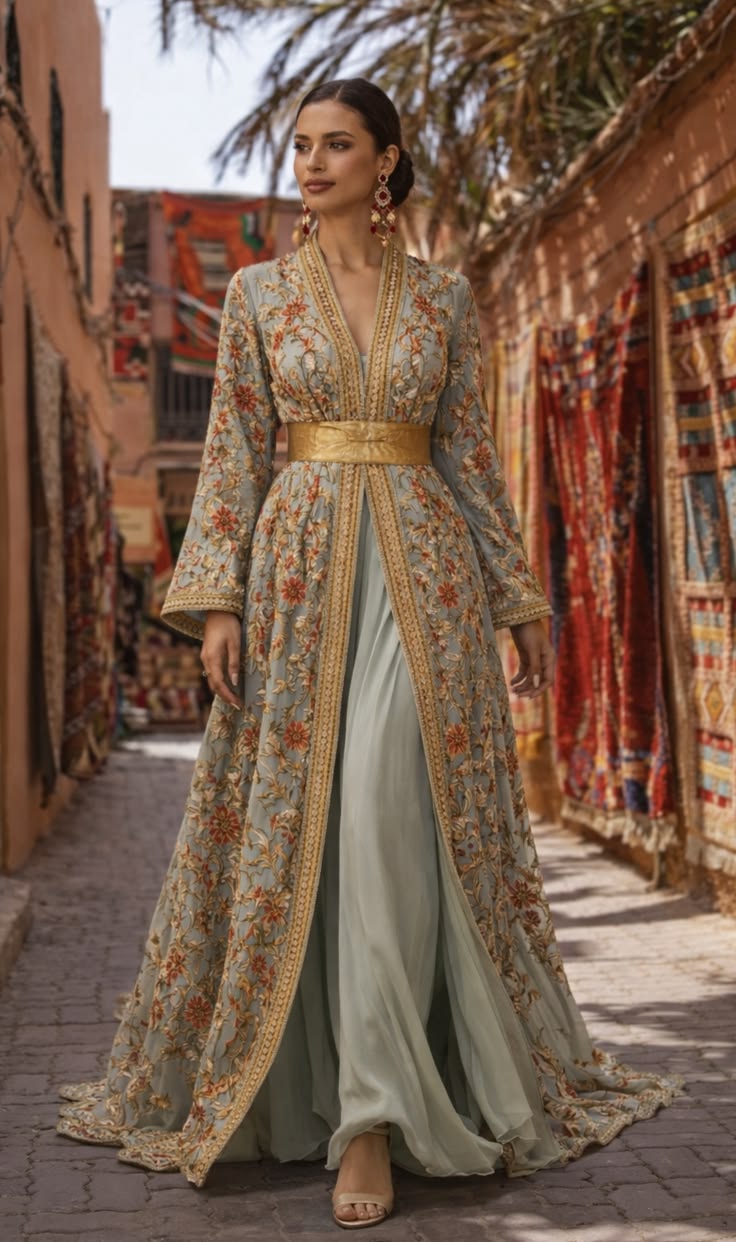
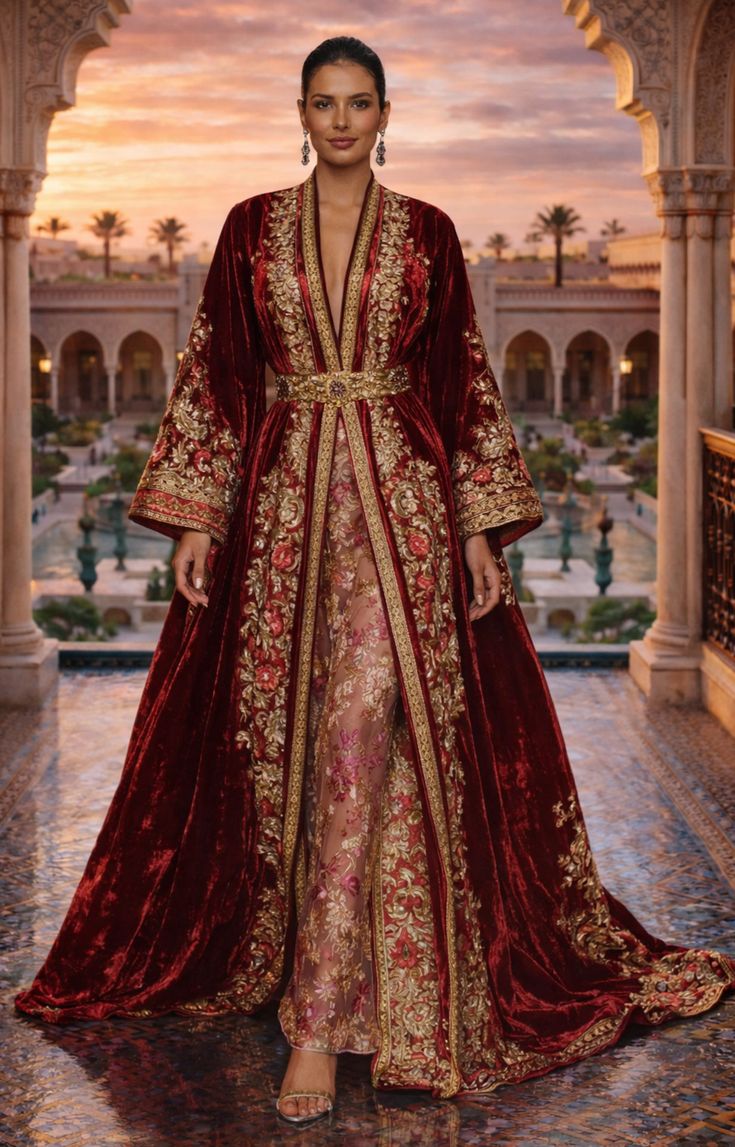
The caftan (or kaftan) in Morocco is a long, flowing dress or gown, open or closed at the front, often with elaborate embroidery, beading, and luxurious fabrics. It is mainly a women’s garment today and occupies a special place in weddings, formal events, and family celebrations.
Essential elements:
Fabric
Silk, brocade, velvet, chiffon, satin, and high-quality blends. The weight and texture of the fabric can indicate season and formality. A deep velvet caftan in winter, a lighter, floating fabric in summer.
Cut
The classic caftan is long, with long sleeves, modest neckline, and a loose but shaped silhouette. Variations include slimmer or wider cuts, layered pieces, and different sleeve styles.
Decoration
Embroidery (often along the neckline, sleeves, front opening, and hem), beading, sequins, and gold or silver thread. These are not random; patterns, colors, and density of decoration often reflect regional influences and personal taste.
Belt (mdamma)
A key piece. The wide, often stiff belt cinches the waist and adds structure. It can be heavily worked in metal thread, stones, or intricate patterns. The belt shifts the caftan from a simple robe to a formal statement.
Your Morocco Adventure Start Here!
Reserve your tour, day trip, or a special activity. If you would like to customize your trip or have an idea feel free to contact us, via any platform you prefer.
The caftan at weddings: more than just a dress
Weddings highlight the elegance of Moroccan traditional clothing symbolism.
For Moroccan brides, the caftan is part of a wider bridal wardrobe that can include several outfit changes during the wedding celebration. Each look can draw from different regions and traditions.
Symbolically, bridal caftans express:
Family pride
The family demonstrates care, investment, and aesthetic sense through the quality and number of outfits.
Transition
Each change of garment can signal a new moment in the ceremony, from engagement acknowledgment to full marriage, from one stage of life to another.
Roots and regional identity
Certain styles are linked to Fes, Rabat, the Sahara, the Rif, or other areas. A bride wearing a particular style connects her story to specific places and communities.
For guests, caftans also matter. A carefully chosen caftan shows respect for the couple and their families, and acknowledges the significance of the occasion.
Urban evolution of the caftan
In cities like Casablanca and Marrakech, designers have pushed the caftan into more modern silhouettes, playing with shorter lengths, lighter fabrics, bolder cuts, and fashion-forward detailing. Yet even the most modern versions keep recognizable elements: the long line, the sfifa and aakaid, the belt, the blending of modesty and elegance.
The caftan has become both a traditional garment and a platform for Moroccan fashion creativity.
Gandoura and Other Key Pieces
Beyond caftan and djellaba, several other garments fill out the Moroccan wardrobe.
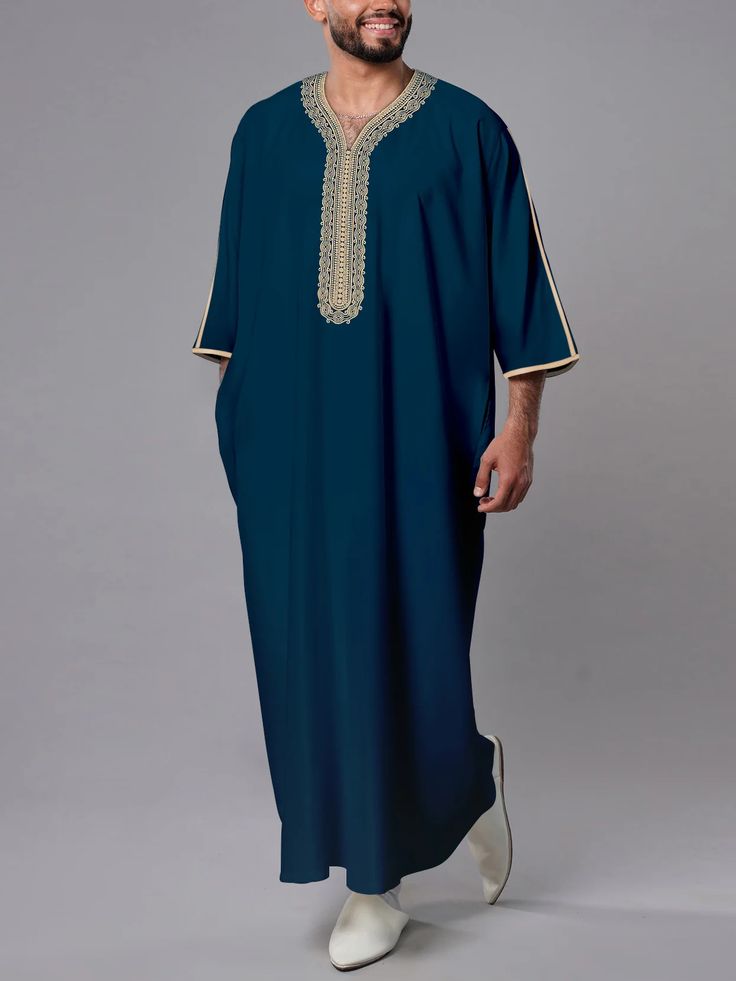
Gandoura
A sleeveless or short-sleeved, wide, long tunic, worn by both men and women. It is lighter and simpler than a djellaba, often used at home or in hot weather. Men might wear a gandoura to the mosque or for relaxed gatherings; women may use it at home or under outer garments.
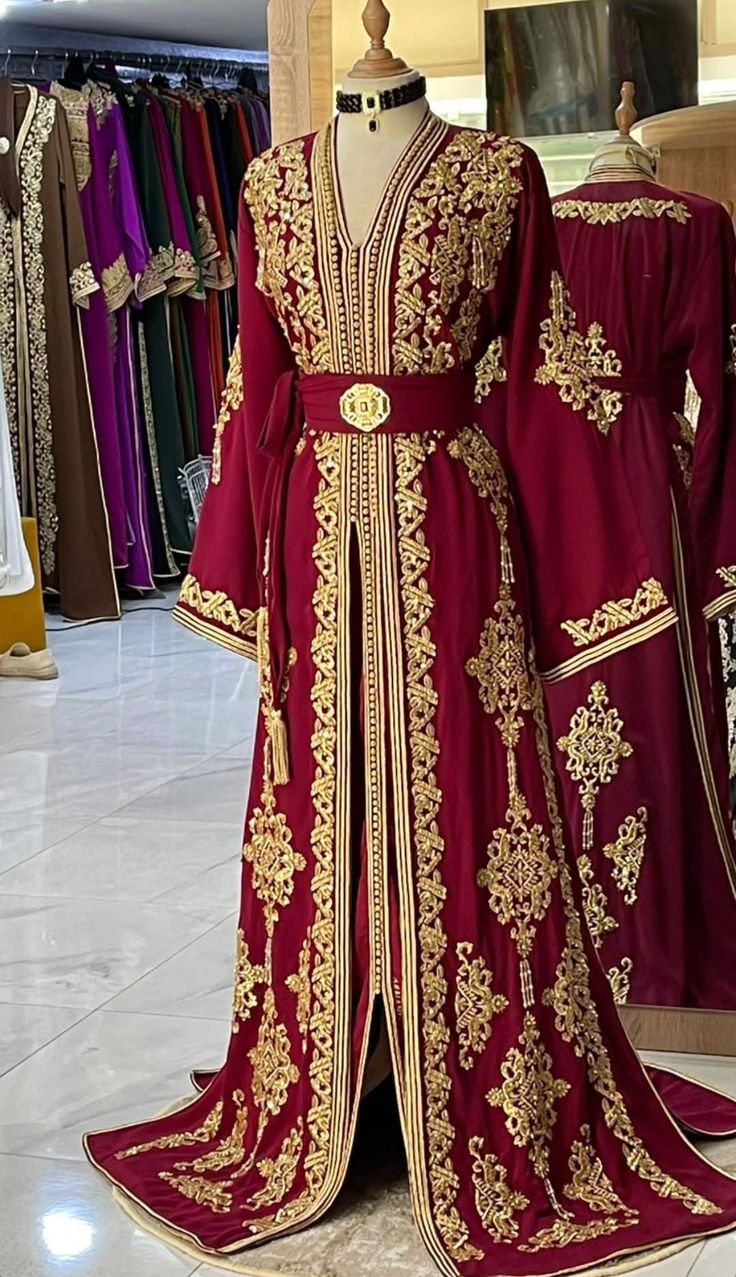
Takchita
Often confused with the caftan, the takchita is usually a two-layered outfit: an under-caftan and an over-dress, often open at the front with more decoration. It is strongly associated with weddings and highly formal events, especially for brides and close family.
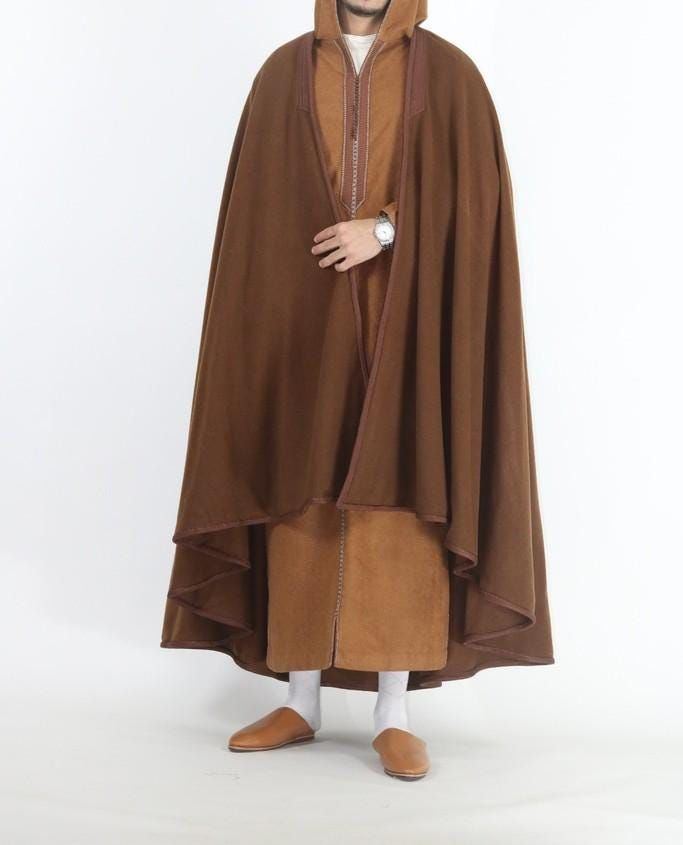
Burnous (or burnoos)
A large cloak, traditionally wool, sometimes hooded, used for warmth and protection. Less common in daily urban use now, but it still appears in certain regions and ceremonial contexts.
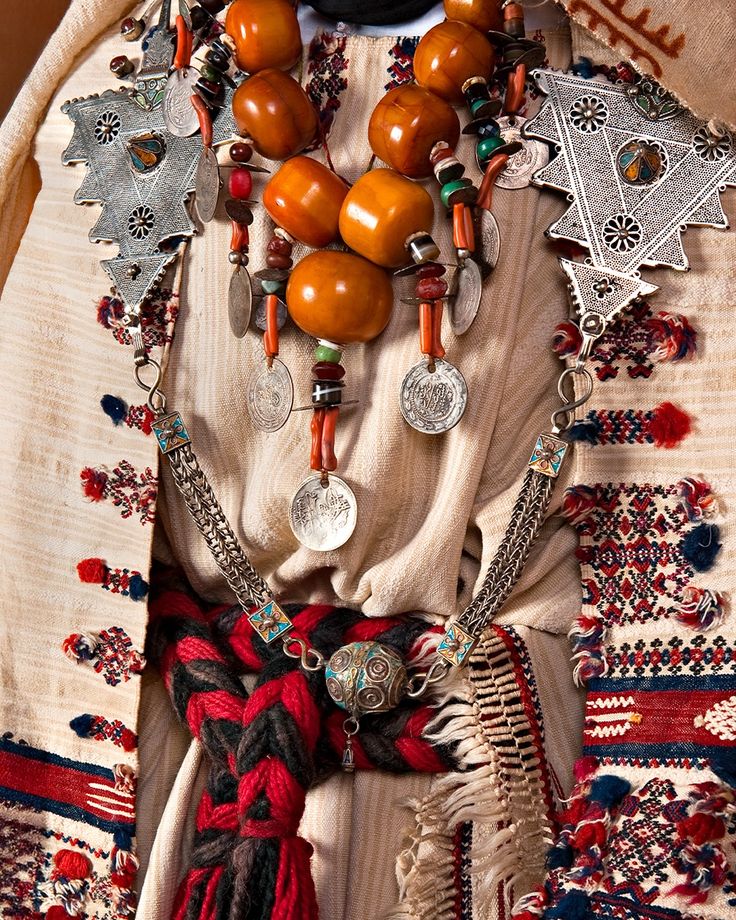
Accessories
Jewish culinary traditions also play a vital role in Morocco’s food culture. Dishes like bastilla (a savory pastry filled with pigeon or chicken), harira (a hearty soup), and t’fina (a slow-cooked stew) have Jewish roots and are still popular in Moroccan cuisine today. Jewish influence can also be found in the country’s famous sweets, such as kaab el ghazal (gazelle horns) and baklava.
Many of these recipes have been passed down through generations and continue to be enjoyed during festive occasions and family gatherings. Exploring Moroccan Jewish cuisine is a delicious way to experience the legacy of a community that once played such a central role in the country’s cultural landscape.
Discover our Morocco Tours from Marrakech
Reserve your tour, day trip, or a special activity. If you would like to customize your trip or have an idea feel free to contact us, via any platform you prefer.
Symbolism: What Traditional Clothing Communicates Without Words
Color
Bright colors and rich fabrics can signal celebration, youth, joy, or family investment. Softer or darker tones can imply maturity, respect, or quiet elegance. White is strongly associated with purity and religious moments.
Cut and coverage
Long sleeves, full length, and modest necklines show alignment with local values around modesty. Even more modern cuts tend to maintain a balance between form and discretion.
Fabric and work
Fine materials and detailed handwork speak to status, but also to appreciation for artisanship. A heavily embroidered caftan says as much about the value placed on tradition as it does about cost.
Occasion
A djellaba in the street, a gandoura at home, a caftan at a wedding, a simple white outfit at a religious ceremony: each choice places the wearer in a shared social script. People know, instantly, what kind of moment they are participating in.
Gender roles and change
Traditional clothing reflects gender expectations, but also how they are shifting. Many women now move between Western outfits for work and traditional garments for home, celebrations, or religious days, choosing according to context rather than obligation alone.
How Moroccans Use Traditional Clothing in Daily Life
It is easy, as a visitor, to imagine that djellabas and caftans are only for tourists’ cameras. The reality is more grounded.
Work and errands
Older men and women, and many people in more traditional neighborhoods, still wear djellabas for everyday tasks: shopping, visiting, going to the mosque, working modest jobs. Younger urban professionals may choose Western clothes more often, but still keep traditional garments at home for certain days or family visits.
Friday and religious occasions
Friday prayers, Eid, religious celebrations, and visits to family often see an increase in traditional dress on the streets, especially near mosques and family homes.
At home
Caftans and gandouras, often in simpler fabrics, can be housewear for women, especially when receiving close family or female guests. These are comfortable, modest, and practical.
Formal life
Engagements, weddings, baptisms, milestone birthdays, and major family dinners are all strong occasions for traditional clothing. In many families, it would feel strange not to dress this way.
Younger generations
Younger Moroccans may experiment: pairing sneakers with djellabas, wearing modernized caftans, or reserving traditional pieces for key dates. Rather than abandoning tradition, many blend it with global fashion.
What This Means for Visitors: Respect and Appreciation
If you are visiting Morocco and interested in traditional clothing, there are a few things worth keeping in mind.
You can wear it, but understand context
Buying a djellaba or a simple caftan as a visitor is common. Many travelers do so both for comfort and as a souvenir. If you wear one, do it with respect. A djellaba in the medina or at dinner is fine. A full bridal-style takchita for a casual stroll is likely to feel out of place.
Support real artisans
If you are interested in having something made, ask your riad or local hosts to recommend tailors who do proper work. Be wary of very cheap “traditional” pieces that are mass-produced at low quality.
Ask before photographing people
Traditional clothing can be visually stunning, but remember it is not a costume; it is personal dress. Always ask permission if you want to photograph someone, especially in more conservative areas or during religious events.
Learn a little about what you see
Not every long robe is a djellaba, and not every dress-like garment is a caftan. Asking gentle questions, when the setting allows, can lead to good conversations. Many Moroccans are proud of their clothing traditions and happy to explain them when approached respectfully.
Traditional Clothing and Modern Identity
Moroccan fashion is not frozen in time. Designers in Casablanca, Marrakech, Rabat, and abroad are constantly reworking the caftan and djellaba, blending them with global influences. Fashion weeks, magazines, and social media all showcase updated versions.
At the same time, the core symbols remain:
Long, flowing lines instead of tight, revealing cuts.
Rich fabrics and detailed handwork as a sign of value.
Modesty expressed with grace, not severity.
Heritage is treated not as a burden, but as a resource.
The result is a living tradition. A young woman in Casablanca might wear jeans, a blazer, and sneakers to work, then step into a tailored caftan for her cousin’s wedding at night. A man who spends his week in a suit and tie may put on a djellaba and leather slippers on Friday for prayers and family lunch.
Neither choice cancels the other. Both are part of a modern Moroccan identity that holds multiple worlds at once
Why Clothing Is One of the Best Windows Into Moroccan Culture
From caftan to djellaba, from gandoura to bridal takchita, traditional clothing in Morocco is a visible, everyday reminder that culture lives in fabric as much as in architecture and food.
Through it, you can see:
How people view modesty and beauty.
How family and ceremony are structured.
How regions keep their own character.
How artisans and designers interact.
How past and present share the same space.
Understanding Moroccan traditional clothing is one of the best ways to appreciate Morocco’s culture, history, and identity.For a visitor, it is easy to focus on souks, monuments, and landscapes. All of that matters. But if you really want to understand Morocco, take an afternoon in a café or on a riad terrace and simply watch what people are wearing, when, and how.