
7 Sounds That Define Music in Marrakech: From Jemaa el-Fnaa to Modern Stages
Music in Marrakech is something you hear before you even see the city. Long before you notice the rooftops, the red walls, or the busy lanes of the medina, you hear it. The call to prayer rolling over the city. The hum of the souks. The clap of hands in a courtyard. The sudden beat of a drum in Jemaa el-Fnaa. The low, hypnotic pulse of Gnawa music drifting from a hidden corner. A wedding band warming up in a side street. A singer in a café. A busker on a square. Music in Marrakech is not a background detail. It is part of the city’s identity.
If you want to understand Marrakech beyond the obvious tourist sights, listen closely. The music tells you what words often cannot. It reveals memory, faith, celebration, resistance, commerce, and change. It connects the old medina to modern stages, family gatherings to public squares, and local ritual to global audiences.
This is a deep look at the musical identity of Marrakech, from Jemaa el-Fnaa to contemporary performance spaces, and why music matters so much in a city that lives through rhythm as much as architecture.
Music in Marrakech
Why music matters in Marrakech
Marrakech is a city of movement, and music gives that movement shape. It appears in streets, markets, homes, religious celebrations, restaurants, festivals, and private parties. Some music is formal. Some are spontaneous. Some are spiritual. Some are commercial. Some are old enough to feel timeless. Some are fresh, hybrid, and modern.
What makes Marrakech special is not just that music exists here. It is that music is woven into everyday life. A square can become a stage without warning. A family gathering can turn into a performance. A religious chant can feel like history in motion. A café can become a listening room. A festival can spill into the streets. In Marrakech, music is one of the main ways people mark time, identity, and belonging.
Jemaa el-Fnaa: the heart of Marrakech’s public soundscape
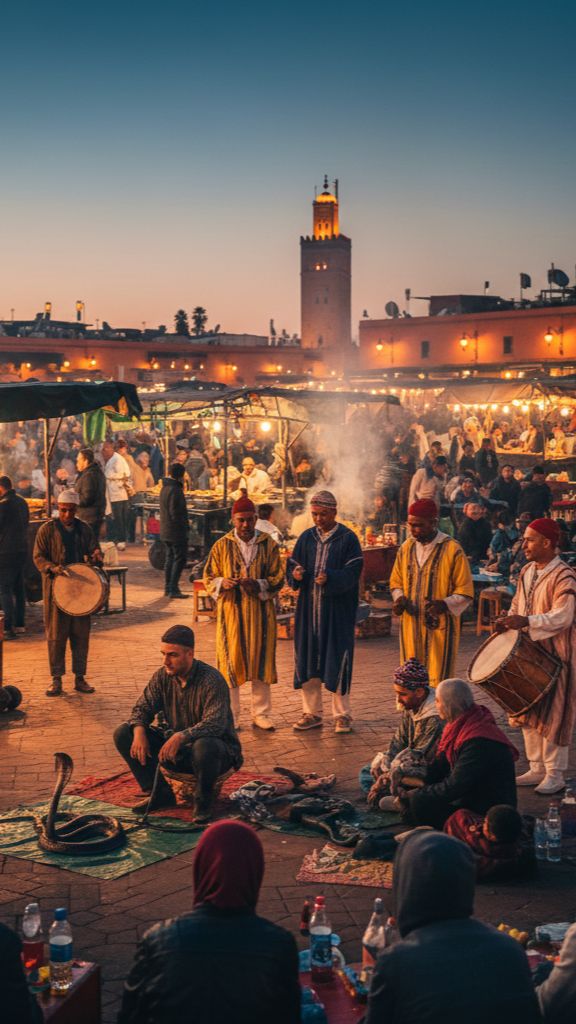
If there is one place that captures the musical identity of Marrakech, it is Jemaa el-Fnaa. By day, it is a busy square filled with vendors, snack stalls, carts, tourists, locals, and movement. By evening, it becomes something else entirely. It turns into a living stage.
You may hear:
- drummers building a crowd
- snake charmers’ flutes
- storytellers drawing listeners in
- folkloric musicians gathering a circle
- chanting, clapping, and call-and-response patterns
- the layered noise of multiple performances happening at once
This is not a neat concert hall experience. It is more raw, more fluid, and more social. You do not sit in silence and wait for a curtain to rise. You move through sound, stop where something catches your attention, and drift again when it does not.
Jemaa el-Fnaa has UNESCO recognition for its cultural significance, and music is central to that status. What survives here is not only a performance tradition, but a form of public memory. Generations of artists, storytellers, and musicians have used the square as a place to connect with audiences in real time, face to face.
For a visitor, the square can feel overwhelming. For Marrakech, it is normal. That contrast says a lot about how the city lives through sound.
The roots of Marrakech’s musical identity
To understand music in Marrakech, you have to understand that the city sits at a crossroads of cultures. Over centuries, Marrakech has absorbed influences from Amazigh communities, Arab traditions, sub-Saharan Africa, Andalusian heritage, Sufi practice, and modern urban life. Those influences did not replace each other. They layered together.
That is why the city’s musical identity is so rich. You hear:
- Amazigh rhythms and rural folk traditions
- Andalusian instrumentation and melodic structure
- Gnawa trance music with spiritual roots
- Sufi chanting and devotional sound
- Moroccan pop and contemporary fusion
- Wedding music that moves between old and new styles
Marrakech does not have one sound. It has many, and they coexist in a way that feels natural to the city itself.
Plan Your Morocco Road Journey!
Long-distance driving in Morocco becomes safer and more enjoyable when planned according to seasonal conditions. Understanding the best time of year for long-distance road travel helps drivers avoid extreme heat, mountain hazards, and heavy traffic.
Select the right season, prepare your vehicle, and explore Morocco’s diverse landscapes with confidence!
Gnawa music in Marrakech
One of the most important musical traditions linked to Marrakech is Gnawa music. Though strongly associated with Essaouira as well, Gnawa has a major presence in Marrakech’s cultural life.
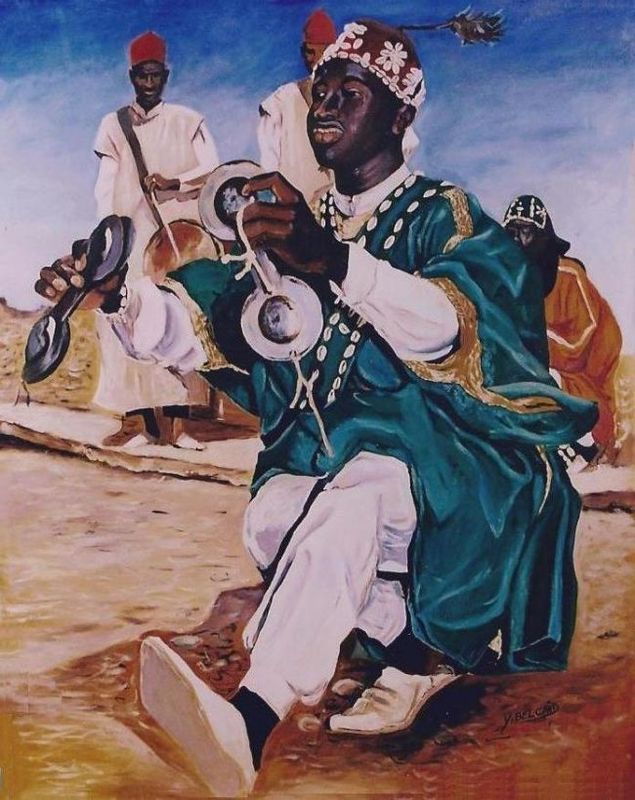
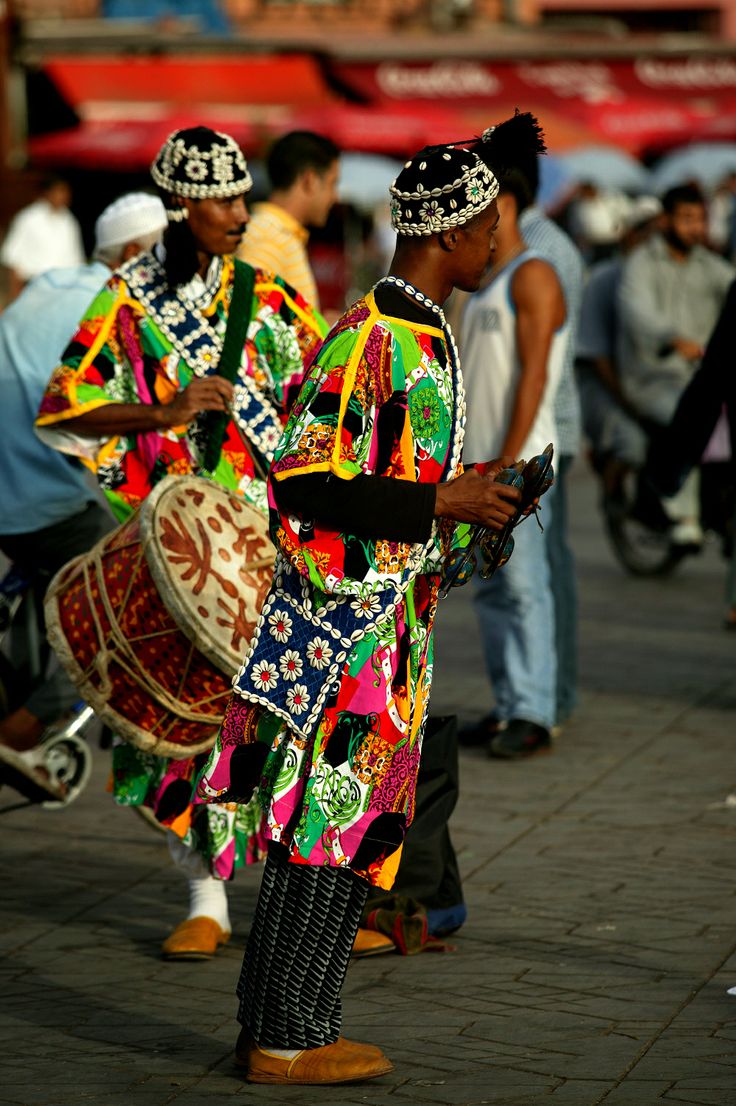
Gnawa music comes from a history shaped by displacement, memory, spirituality, and healing. Its instruments and rhythms create a trance-like effect. The guembri, a three-stringed bass lute, anchors the sound, while qraqeb, metal castanets, add sharp rhythmic texture. Vocals repeat phrases in a call-and-response style, building intensity over time.
In Marrakech, Gnawa can be heard:
- in public performances
- at cultural festivals
- in intimate gatherings
- in modern fusion concerts
- in tourist-friendly showcases
- and occasionally in more sacred or closed settings
What makes Gnawa especially powerful in Marrakech is that it can function on multiple levels. It is music, but it is also spiritual practice, communal memory, and emotional expression. It can be entertaining, meditative, and deeply meaningful at the same time.
For visitors, a Gnawa performance is often one of the most memorable things they experience in the city. For locals, it is part of a broader musical landscape that still carries respect and emotional weight.
Street musicians and the living tradition of performance
One of the most beautiful things about music in Marrakech is that it is not locked away in formal venues. You encounter it in motion.
Street musicians may perform:
- in Jemaa el-Fnaa
- near busy souk entrances
- around cafés and terraces
- outside riads and hotels
- during festivals and religious seasons
- in quieter lanes where a small crowd forms naturally
These musicians are part of the city’s pulse. They keep traditions visible, but they also adapt to tourism, urban change, and shifting public tastes. Some play classic instruments. Some sing old songs. Some mix styles. Some are primarily performing for local listeners, while others are engaging visitors who may not understand the language but still respond to the rhythm.
That connection matters. Music crosses language barriers faster than almost anything else in Marrakech. A visitor might not understand the words, but they understand tension, release, tempo, and emotion. That shared response is part of the city’s charm.
Music at weddings and family celebrations
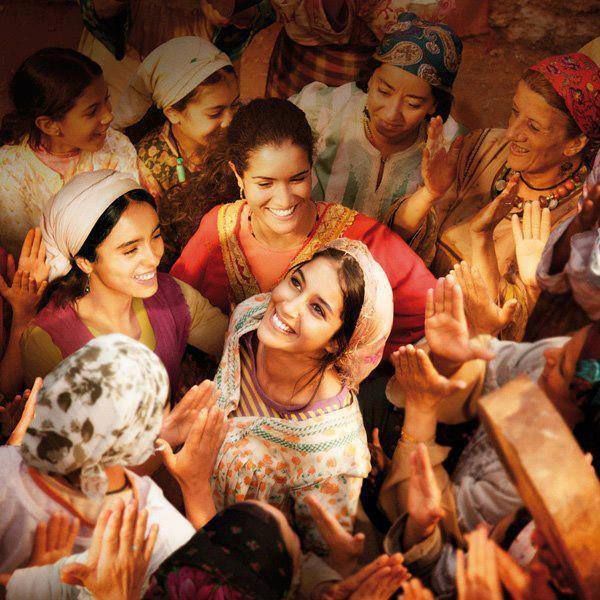
If you want to see the full social power of music in Marrakech, attend a wedding or family celebration. Music is not a side attraction in these settings. It is the engine of the event.
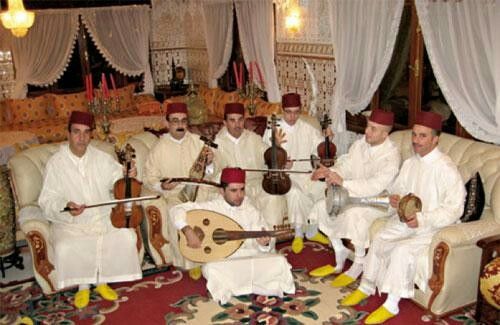
Moroccan weddings often include:
- live bands
- percussion
- traditional singing
- modern dance tracks
- processional music
- multiple outfit changes
- moments where the whole room joins in
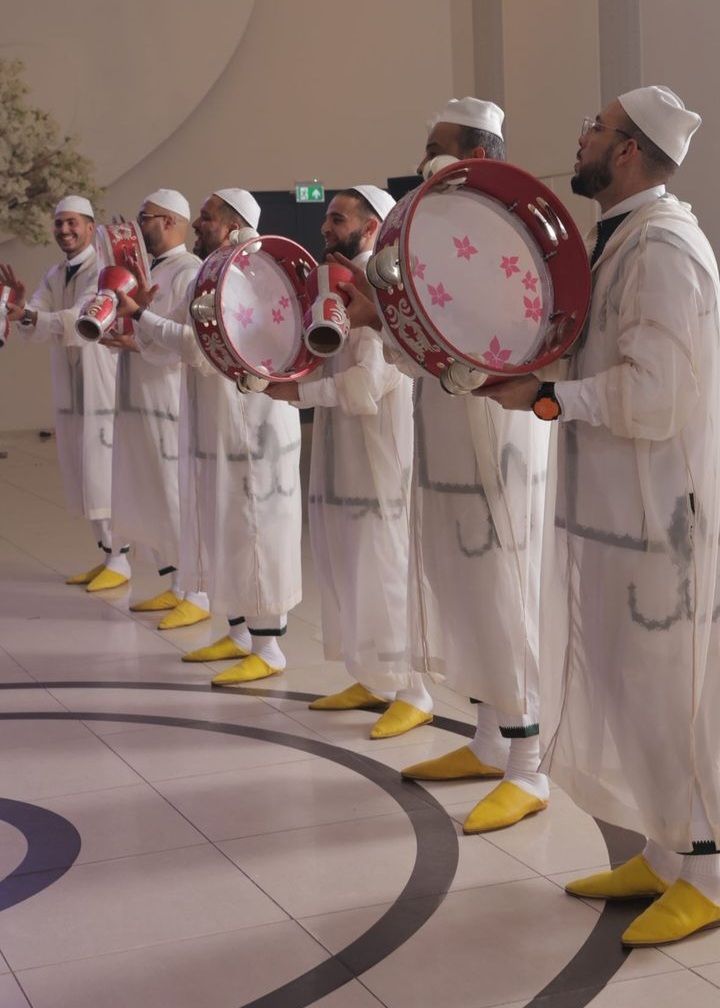
The music helps guide the ceremony. It marks entrances, transitions, blessings, and big emotional moments. In many families, the playlist or band choice is almost as important as the venue. Songs can signal regional identity, generational taste, and family pride.
This is where Marrakech’s musical identity becomes especially clear. The city is not frozen in folk tradition. It is alive to modern influences too. Many celebrations mix older rhythms with contemporary Arabic, Moroccan, and international music. That blending is not a compromise. It is a reflection of how people actually live.
Sufi traditions and spiritual sound
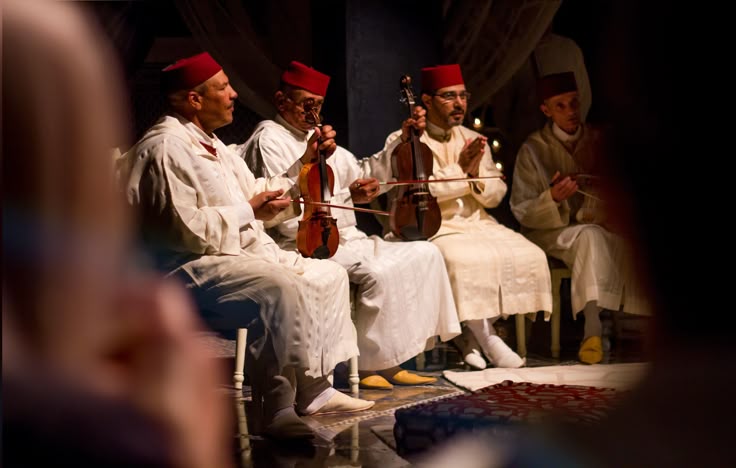
Marrakech also has a deep relationship with Sufi musical practice. In Moroccan Sufism, music and repetition can be used to guide listeners toward spiritual reflection, remembrance, and emotional openness.
Sufi gatherings may include:
- chanting
- repeated phrases
- drums
- group movement
- devotional singing
- a gradual build in tempo and intensity
This kind of music is not designed purely for entertainment. Its purpose is different. It opens a space for contemplation, remembrance, and collective feeling.
For visitors, Sufi music can be striking because it feels both ancient and immediate. It often carries a gravity that stands apart from the street energy of the souks or the festive atmosphere of weddings. Yet it still belongs to the same city. That is part of Marrakech’s musical richness. It contains both the public square and the inward, spiritual room.
Music and the tourist experience in Marrakech
Many visitors first encounter Marrakech music through a performance meant, at least partly, for tourism. That is not a bad thing. In fact, it can be a meaningful introduction if you know what you are hearing.
Tourist-facing music in Marrakech might include:
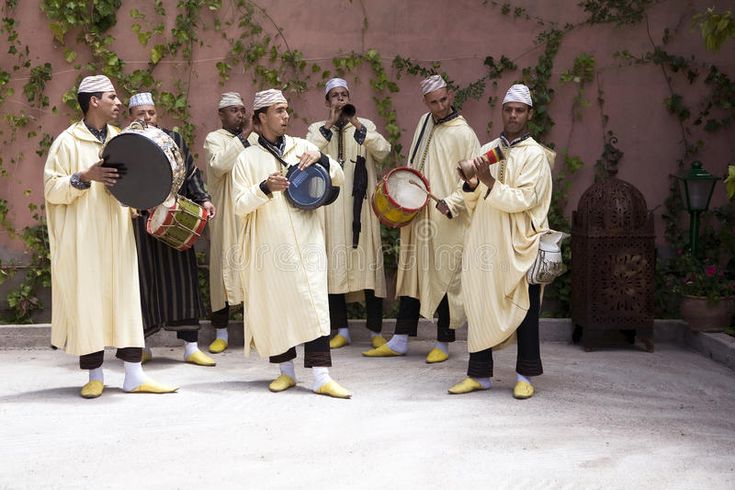
- folkloric ensembles in restaurants
- drum circles in squares
- Gnawa showcases
- dance performances in cultural dinners
- rooftop music nights
- hotel entertainment
- festival events aimed at mixed audiences
These performances vary widely in quality and authenticity. Some are excellent and deeply rooted. Some are simplified for visitors. Some are genuine expressions of local heritage, presented in a way that makes them accessible. Others are closer to entertainment products.
The key is to stay curious. Ask what tradition you are hearing. Notice whether the music feels locally grounded or staged for effect. The more you listen, the easier it becomes to tell the difference.
Modern stages and Marrakech’s evolving music scene
Marrakech is not only about heritage. It also has a modern music scene that keeps growing.
Across the city, you can find:
- live music bars
- festival venues
- cultural centers
- hotel lounges with curated performances
- fusion concerts
- DJ sets with Moroccan influences
- artist residencies and collaborations
These modern spaces do not erase tradition. They extend it. A young musician might blend Gnawa percussion with jazz. A singer may mix Arabic lyrics with electronic beats. A band may use traditional instruments in a more contemporary arrangement. That kind of experimentation is common in Marrakech, especially among younger creatives and artists connected to urban culture.
This is one of the most interesting things about the city’s musical identity. It is not trapped in nostalgia. It is constantly being rewritten. The old sounds are still present, but they are being reinterpreted for new audiences and new contexts.
Music as part of everyday social life
In Marrakech, music is not only for formal events or performances. It exists in ordinary life.
You may hear it from:
- open shop doors
- workshops and cafés
- family homes during celebrations
- market stalls with a radio playing
- taxi drivers listening to local songs
- people singing along while working
- neighbors gathered in doorways during the evening
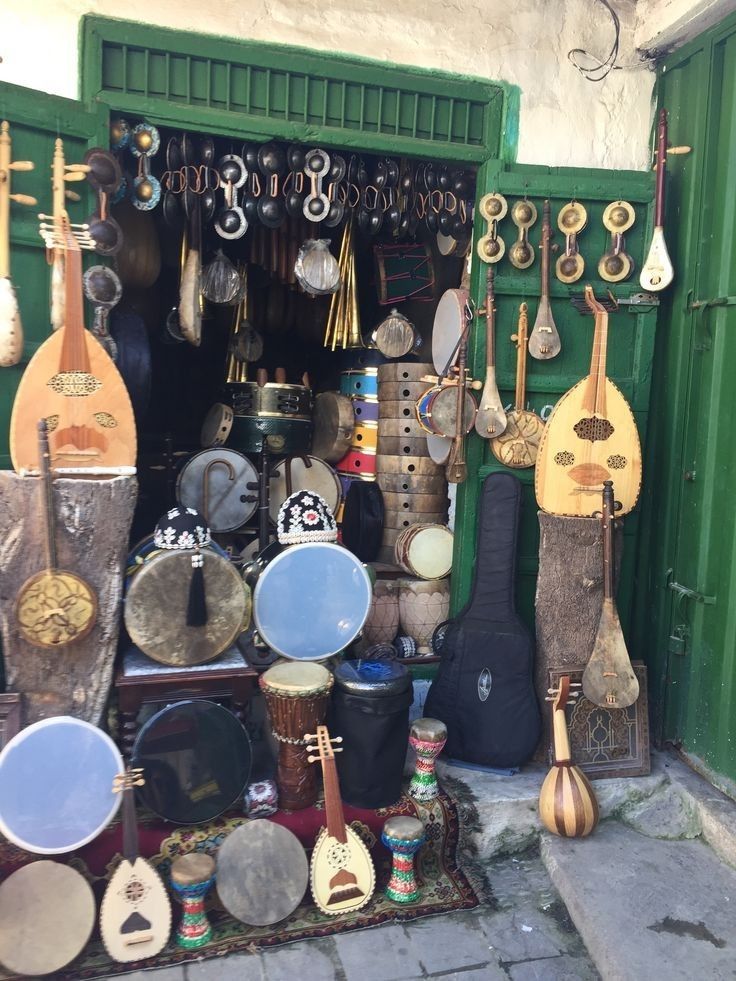
This everyday presence matters because it shows that music in Marrakech is not separate from life. It is part of how people socialize, work, celebrate, and relax.
A song may remind someone of home. A drum pattern may summon a crowd. A melody may carry local pride. A familiar voice may connect generations. In this sense, the city’s music is not just a cultural product. It is social glue.
What visitors often miss about Marrakech music
Many travelers only hear the most visible layer of the city’s sound. They hear the square, the hustle, the street performance. That is only a fraction of the story.
What they may miss is:
- the family music played in private homes
- the regional styles brought into the city by migrants and workers
- the subtle differences between commercial and ritual performance
- the way youth culture is reshaping older genres
- the role of music in religious and seasonal life
- the deep connection between sound, memory, and identity
Marrakech music is easy to admire but harder to fully read. The more time you spend, the more you understand that the city’s soundscape is not random. It is layered, historical, and alive.
Where to hear the best music in Marrakech
If you want to explore the musical identity of Marrakech, you do not need to go to one single place. You need to listen in several settings.
Good places to encounter live music include:
- Jemaa el-Fnaa in the evening
- cultural festivals and seasonal events
- music-friendly cafés and restaurants
- rooftop venues with live bands
- traditional performance spaces
- art centers and heritage venues
- local celebrations, if you are invited respectfully
Each setting offers a different angle. The square gives you public energy. A café gives you intimacy. A festival gives you scale. A wedding gives you community. A cultural center gives you context. Together, they show the range of Marrakech’s musical life.
How music shapes the mood of the city
Music changes how Marrakech feels.
Without music, the medina would still be vibrant. But with music, the city acquires a second layer of meaning. It becomes more memorable, more textured, and more emotionally charged.
A drumbeat can make a square feel larger.
A chant can make a courtyard feel sacred.
A song can make a dinner feel communal.
A performance can make a night feel timeless.
That is why Marrakech leaves such a strong impression on visitors. The city does not only show itself through buildings and markets. It speaks through rhythm.
Music and identity in a changing city
Like many historic cities, Marrakech is changing quickly. Tourism, social media, global travel, urban development, and shifting tastes all affect the music scene. Some traditions are more visible than before. Others are harder to maintain. New genres are gaining ground. Young musicians are experimenting. Public spaces are evolving.
But the core idea remains: music still matters here.
It matters in the square.
It matters in the home.
It matters at weddings.
It matters in spiritual spaces.
It matters on modern stages.
It matters to tourists, yes, but more importantly, it matters to the people who live in Marrakech.
That is what gives the city’s musical identity its depth. It is not only performance. It belongs
Why listening is one of the best ways to experience Marrakech
A lot of travelers focus on what to see in Marrakech. That makes sense. The architecture, colors, and street scenes are unforgettable. But if you want to really understand the city, listen as much as you look.
Listening helps you notice:
- how public space is used
- how traditions survive
- how modern culture is layered onto old forms
- how different communities express themselves
- how celebration and spirituality coexist
- how the city shifts from day to night
Music is one of the clearest ways into that understanding. It tells you how Marrakech feels from the inside.
From Jemaa el-Fnaa to modern stages, the musical identity of Marrakech is broad, layered, and constantly evolving. It includes ancient rhythms and new experiments, public squares and private homes, spiritual chanting and commercial performances, local pride and global influence.
If you visit Marrakech, do not just look around. Listen carefully. Stand still in the square. Enter a café with live music. Ask about the instruments. Stay for a wedding band if you are lucky enough to be invited. Pay attention to how sound moves through the city.
Music in Marrakech is not just entertainment—it is the soul of the city.