
Best Time to Visit the Sahara Desert: A Month-by-Month Guide
Planning a trip to the Sahara Desert is one of the most exciting parts of a Morocco adventure. From riding a camel across golden dunes to watching the sunset over Erg Chebbi and sleeping beneath a sky full of stars, a Sahara experience can become one of the most memorable moments of your journey.
But choosing the best time to visit the Sahara Desert matters.
The Moroccan desert experiences significant temperature differences throughout the year. Spring and autumn generally offer the most comfortable conditions for exploring the dunes, while summer can be extremely hot during the day and winter nights can become surprisingly cold. The Moroccan National Tourist Office also identifies spring and autumn as the best seasons for visiting the Sahara.
That does not mean there is only one perfect month. Each season offers a different experience.
This month-by-month guide to the Sahara Desert explains what to expect from January through December, including weather, desert activities, crowds, camel trekking, camping, and the best months for different types of travelers.
Whether you are planning a Merzouga desert tour from Marrakech, a journey from Fes, or a longer Morocco itinerary, understanding the seasons can help you choose the right dates for your adventure.
What Is the Best Time to Visit the Sahara Desert?
For most travelers, the best time to visit the Sahara Desert is during spring and autumn, particularly from March to May and September to November.
These periods generally provide a better balance between daytime temperatures and comfortable outdoor activities.
Spring is ideal for travelers who want pleasant temperatures, while autumn is especially attractive for those planning a Sahara trip after the intense summer heat.
Best Months at a Glance
|
Month |
Overall Experience |
Main Consideration |
|
January |
Good |
Cold nights |
|
February |
Good |
Cool evenings |
|
March |
Excellent |
Comfortable temperatures |
|
April |
Excellent |
One of the best months |
|
May |
Excellent |
Warmer days |
|
June |
Moderate |
Increasing heat |
|
July |
Challenging |
Very hot daytime temperatures |
|
August |
Challenging |
Extreme summer heat |
|
September |
Very Good |
Heat begins to ease |
|
October |
Excellent |
Comfortable desert weather |
|
November |
Excellent |
Mild days, cool nights |
|
December |
Good |
Cold nights |
The desert climate can vary from day to day, so travelers should always prepare for temperature changes between daytime and nighttime.
Plan Your Morocco Road Journey!
Long-distance driving in Morocco becomes safer and more enjoyable when planned according to seasonal conditions. Understanding the best time of year for long-distance road travel helps drivers avoid extreme heat, mountain hazards, and heavy traffic.
Select the right season, prepare your vehicle, and explore Morocco’s diverse landscapes with confidence!
January in the Sahara Desert
January is winter in Morocco, and the Sahara can be surprisingly cold once the sun goes down.
During the day, temperatures can be pleasant for sightseeing and desert activities, particularly when the sun is shining. However, nighttime temperatures can drop significantly.
This makes January a particularly interesting month for travelers who prefer cooler daytime conditions and do not mind cold desert nights.
What to Expect in January
- Cool to mild daytime conditions
- Cold nights
- Excellent visibility and clear skies on many nights
- Fewer visitors than during peak periods
- Great conditions for photography during daylight hours
The coldest part of the experience is usually after sunset and before sunrise.
If you plan to sleep in a desert camp, make sure your accommodation provides appropriate bedding and bring warm layers.
Is January Good for Camel Trekking?
Yes.
Camel trekking can be enjoyable during the daytime when temperatures are comfortable.
The best strategy is to schedule outdoor activities around daylight hours and prepare carefully for the cold after sunset.
February in the Sahara Desert
February continues the cooler winter conditions but gradually moves toward spring.
It can be a good month for travelers looking for a quieter Sahara experience.
The dunes around Merzouga remain spectacular, and the cooler weather can make walking and camel trekking comfortable.
Why Visit the Sahara in February?
February can appeal to travelers who:
- Prefer cooler temperatures
- Want to avoid the summer heat
- Enjoy peaceful desert landscapes
- Want excellent photography conditions
- Do not mind cold evenings
As with January, warm clothing is particularly important for overnight desert stays.
A desert environment can feel warm under the daytime sun and extremely cold once the temperature drops at night.
March in the Sahara Desert
March is one of the first excellent months for a Sahara adventure.
Temperatures generally become more comfortable as winter ends, making it easier to spend extended periods outdoors.
The Moroccan National Tourist Office recommends spring as one of the best periods to explore the Sahara.
Why March Is a Great Choice
March offers a good balance between:
- Comfortable daytime temperatures
- Cooler but manageable nights
- Outdoor activities
- Camel trekking
- Desert photography
- Stargazing
It is an excellent month for combining the Sahara with other Moroccan destinations.
For example, a route from Marrakech can cross the High Atlas Mountains before continuing through Aït Benhaddou, Ouarzazate, Dades Valley, Todra Gorge, and finally Merzouga.
Morocco Travel Road’s 5-Day Sahara Desert Tour from Marrakech follows this type of route, combining the mountains, kasbahs, valleys, and Erg Chebbi dunes.
April in the Sahara Desert
April is widely considered one of the best months to visit the Sahara Desert.
Spring temperatures are generally comfortable enough for camel trekking, hiking around the dunes, sightseeing, and exploring nearby desert communities.
Why April Is So Popular
April offers an attractive combination of:
- Warm but generally manageable daytime temperatures
- Comfortable outdoor conditions
- Cooler evenings
- Excellent sunset and sunrise experiences
- Good conditions for camel trekking
- Strong photography opportunities
If you are visiting Morocco specifically for the Sahara, April is an excellent choice.
What Should You Pack?
Even during spring, bring a light jacket or warm layer for the evening.
The desert can cool quickly after sunset.
You should also bring:
- Sunglasses
- Sunscreen
- Comfortable shoes
- Lightweight clothing
- A hat or scarf
- Reusable water bottle
- Warm layer for the evening
May in the Sahara Desert
May marks the transition toward hotter conditions.
The beginning of the month can still be very comfortable, while temperatures become increasingly warm as summer approaches.
For travelers who enjoy warm weather, May can be an excellent time for a desert adventure.
Best Activities in May
Camel trekking is best scheduled around sunrise or sunset.
These periods provide cooler conditions and also offer the most dramatic light over the dunes.
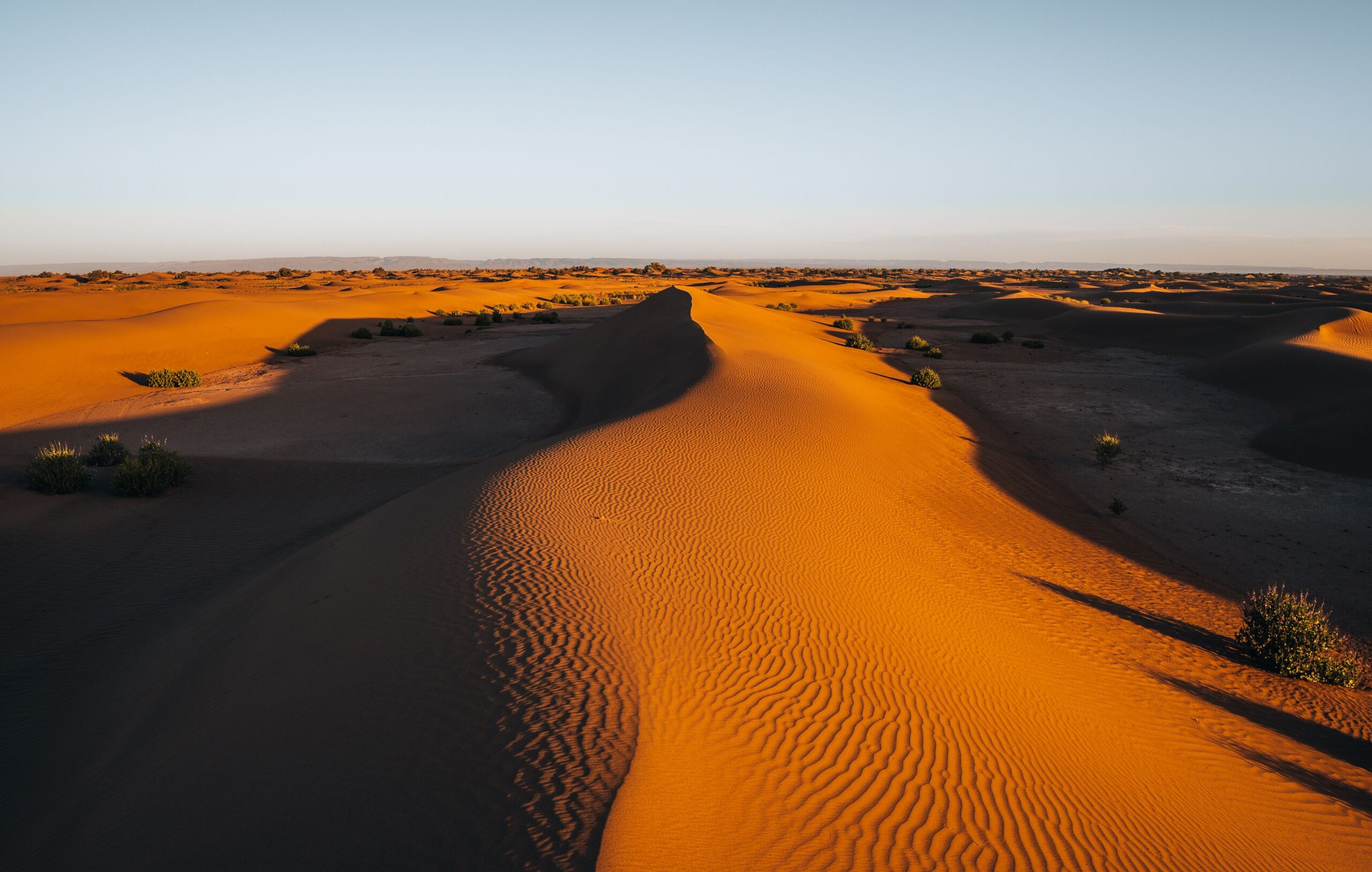
The golden colors of Erg Chebbi can change rapidly as the sun moves across the horizon.
May is also a good month for:
- Desert photography
- Sandboarding
- Sunset watching
- Sunrise walks
- Desert camping
- Cultural excursions
Morocco Travel Road’s Complete Guide to Visiting Merzouga also recommends spring as one of the best periods to explore the region, with warm days and cooler nights.
June in the Sahara Desert
June marks the beginning of the hotter summer period.
The Sahara can still be visited, but travelers need to adapt their schedule to the heat.
During the middle of the day, outdoor activities can become uncomfortable.
How to Visit the Sahara in June
If you travel in June:
- Start activities early
- Avoid prolonged exposure during midday
- Drink plenty of water
- Wear breathable clothing
- Use sun protection
- Schedule camel rides around sunrise or sunset
A desert tour can still be rewarding in June, particularly if you choose an itinerary that balances desert activities with air-conditioned transportation and comfortable accommodation.
July in the Sahara Desert
July is one of the hottest months in the Moroccan Sahara.
Daytime temperatures can become extremely high, making long outdoor activities uncomfortable.
Morocco Travel Road’s Merzouga guide notes that summer temperatures in the desert can exceed 40°C (104°F) during the day.
Should You Visit the Sahara in July?
You can, but July is generally not the best month for travelers who want extensive daytime desert activities.
If July is the only time you can travel, plan your activities carefully.
Camel trekking should preferably take place during cooler hours, especially around sunset.
Who Might Enjoy July?
July may suit travelers who:
- Have fixed summer holidays
- Prefer hot weather
- Want fewer crowds
- Are comfortable adapting their schedule
- Mainly want sunrise, sunset, and evening desert experiences
For families with young children or travelers sensitive to heat, spring or autumn may be more comfortable.
August in the Sahara Desert
August is typically another very hot month in the Sahara.
The combination of high daytime temperatures and intense sunlight means that travelers need to take extra precautions.
Is August a Good Time for the Sahara?
For most people, August is not the ideal month.
However, the Sahara remains accessible.
If you travel during August, focus outdoor activities on:
Early morning: sunrise and short excursions
Late afternoon: camel trekking and sightseeing
Evening: dinner, music, and desert camp activities
Night: stargazing and relaxing at camp
Avoid spending long periods walking across exposed dunes during the hottest part of the day.
The Advantage of Summer
One potential advantage of traveling during summer is that the desert can feel quieter.
Travelers who do not mind high temperatures may appreciate the peaceful atmosphere.
Still, if you have flexibility, September, October, April, or May will generally provide a more comfortable experience.
September in the Sahara Desert
September is a transition month.
The intense summer heat begins to ease, particularly toward the end of the month.
This makes September an increasingly attractive period for Sahara tours.
Why Visit in September?
September offers:
- Warm desert landscapes
- Gradually improving temperatures
- Excellent sunset conditions
- Good camel trekking opportunities
- Fewer extreme summer conditions
The Moroccan National Tourist Office identifies autumn as one of the best periods to explore the Sahara.
If you are planning a late-summer or early-autumn Morocco trip, September can be an excellent compromise.
October in the Sahara Desert
October is one of the best months to visit the Sahara Desert.
The extreme heat of summer has generally passed, while daytime temperatures remain pleasant enough for outdoor adventures.
This makes October especially popular for:
- Camel trekking
- Desert camping
- Photography
- Sandboarding
- Hiking
- Sunset watching
- Sunrise experiences
Why October Is So Special
The desert becomes much easier to enjoy when temperatures are comfortable.
You can spend more time outdoors without constantly worrying about the midday heat.
October is also a great month for a longer Morocco itinerary because you can combine the Sahara with Marrakech, the High Atlas Mountains, Aït Benhaddou, Ouarzazate, and other destinations.
Morocco Travel Road’s Complete Guide to Visiting Morocco identifies September to November as an excellent period for sightseeing and desert tours because of the milder temperatures.
November in the Sahara Desert
November continues the comfortable autumn season but becomes noticeably cooler, particularly at night.
For many travelers, this is still an excellent time to visit.
What Makes November Attractive?
- Mild daytime weather
- Cooler evenings
- Comfortable camel trekking
- Excellent photography
- Clear night skies
- Less summer heat
The evenings can become cold, so pack accordingly.
If you are sleeping in a desert camp, bring a warm layer even if Marrakech feels comfortable during the day.
December in the Sahara Desert
December marks the beginning of winter.
Daytime conditions can remain pleasant, but nights can be very cold.
This makes December a unique period for travelers who enjoy winter landscapes and crisp desert skies.
Why Visit in December?
One of the biggest advantages is the atmosphere.
The desert can feel incredibly peaceful, and clear winter nights can provide excellent opportunities for stargazing.
The Moroccan National Tourist Office highlights the contrast between Morocco’s regions and seasons, with winter bringing colder conditions at higher elevations and different weather patterns across the country.
What to Pack for December
Bring:
- Warm jacket
- Fleece or sweater
- Long trousers
- Warm socks
- Closed shoes
- Hat or scarf
- Layers for changing temperatures
Do not assume that because you are visiting a desert, it will always be hot.
Best Season for a Sahara Desert Tour
While every month has advantages, the four seasons offer very different experiences.
Spring: March to May
Spring is one of the strongest choices for a Sahara adventure.
The temperatures are generally comfortable and the desert is ideal for outdoor activities.
Best for: camel trekking, photography, hiking, and first-time visitors.
Summer: June to August
Summer is the hottest season.
Daytime temperatures can become extreme, particularly in July and August.
Best for: travelers with fixed summer schedules who are comfortable with high temperatures.
Autumn: September to November
Autumn is another excellent season.
Temperatures become more comfortable after summer, making desert activities much more enjoyable.
Best for: couples, families, photographers, and travelers seeking comfortable weather.
Winter: December to February
Winter offers mild daytime conditions but cold nights.
Best for: stargazing, peaceful landscapes, and travelers who prefer cooler weather.
Best Time for Camel Trekking in the Sahara
Camel trekking is one of the most iconic Moroccan desert experiences.
The best time of day matters almost as much as the month.
Sunrise Camel Trek
Early morning is excellent for camel trekking because temperatures are cooler and the soft morning light creates beautiful colors across the dunes.
Sunset Camel Trek
Sunset is another favorite.
As the sun drops toward the horizon, the dunes can shift from golden to orange and deeper shades.
Morocco’s National Tourist Office specifically highlights sunrise and sunset as special moments in the Merzouga desert.
Avoid the Midday Heat
During hot months, avoid long camel rides during the hottest part of the day.
The combination of direct sunlight, hot sand, and limited shade can be exhausting.
Best Time for a Desert Camp Experience
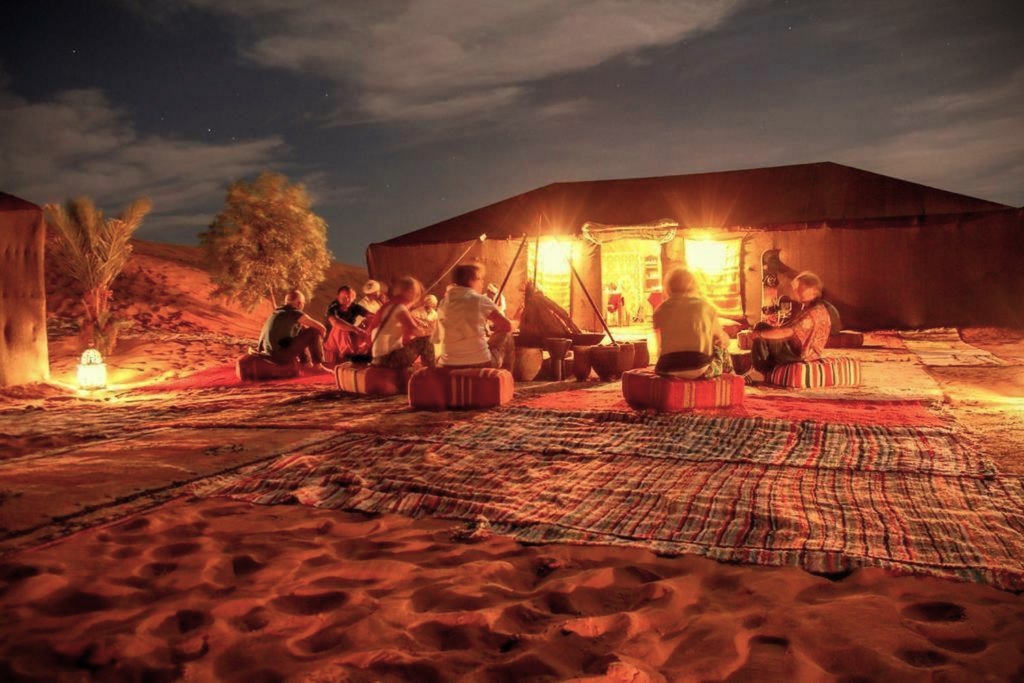
Sleeping in the Sahara is very different from visiting the dunes for a few hours.
Your comfort depends heavily on the season.
Spring and Autumn
These are arguably the most comfortable seasons for desert camping.
The evenings are usually manageable with appropriate layers.
Summer
Summer nights can remain warm, although temperatures can fall after sunset.
Choose a camp with comfortable sleeping arrangements and good ventilation.
Winter
Winter camping can be magical, but nights can be very cold.
Make sure your camp provides adequate blankets and bedding.
The reward can be spectacular skies and an incredibly peaceful atmosphere.
Best Time for Stargazing in the Sahara
The Sahara is an excellent place to experience the night sky because of its remote landscapes and limited artificial light.
Winter can be particularly attractive for travelers who enjoy crisp nights and clear skies, although stargazing is possible throughout the year when conditions are favorable.
For the best experience:
- Choose a remote camp
- Avoid unnecessary artificial light
- Check the moon phase if possible
- Give your eyes time to adjust
- Bring a warm layer
- Consider a tripod if you enjoy night photography
The desert’s silence makes stargazing especially memorable.
Merzouga or Agafay: Which Desert Should You Visit?
Not every traveler has enough time to reach the Sahara.
This is where Agafay can be an alternative.
Agafay is a rocky desert located much closer to Marrakech, while Merzouga offers the classic Sahara landscape of large golden sand dunes.
Morocco Travel Road explains that Agafay is only around 30–40 km from Marrakech, while reaching Merzouga from Marrakech generally requires a much longer journey.
Choose Merzouga If You Want:
- Large golden sand dunes
- A classic Sahara experience
- Camel trekking
- Remote desert landscapes
- A multi-day adventure
- Overnight desert camping
Choose Agafay If You Want:
- A short escape from Marrakech
- Rocky desert scenery
- A one-day or one-night experience
- Less driving
- A convenient desert-style experience
If your dream is the classic image of camel caravans crossing huge golden dunes, Merzouga is the better choice.
How to Plan Your Sahara Desert Tour
Choosing the right month is only the first step.
You also need to consider how much time you have and where you are starting from.
From Marrakech
Marrakech is one of the most popular starting points for Sahara tours.
A multi-day itinerary allows you to combine the desert with:
- High Atlas Mountains
- Aït Benhaddou
- Ouarzazate
- Dades Valley
- Todra Gorge
- Rissani
- Merzouga
Morocco Travel Road offers several options from Marrakech, including the 5-Day Sahara Desert Tour from Marrakech and shorter Marrakech to Merzouga Desert Tours.
From Fes
Fes is another popular starting point.
The route crosses the Middle Atlas and can include Ifrane, cedar forests, Midelt, the Ziz Valley, Erfoud, and Merzouga.
From Errachidia
Errachidia is much closer to the Sahara.
Travelers arriving in Errachidia can reach Merzouga more quickly than those traveling from Marrakech or Fes.
Morocco Travel Road also offers a 4-Day Morocco Tour from Errachidia to Merzouga and Marrakech, including Erfoud, Rissani, Erg Chebbi, and the High Atlas.
What to Pack for the Sahara Desert
Regardless of when you travel, preparation is important.
Essential Items
Bring:
- Lightweight breathable clothing
- Warm layers
- Comfortable walking shoes
- Sunglasses
- Sunscreen
- Hat
- Scarf
- Reusable water bottle
- Small backpack
- Power bank
- Camera
- Basic toiletries
For Winter
Add:
- Warm jacket
- Fleece
- Warm socks
- Hat
- Gloves if needed
For Summer
Focus on:
- Lightweight clothing
- Extra water
- Sun protection
- Breathable fabrics
- A wide-brimmed hat
Layering is the safest strategy because desert temperatures can change dramatically between day and night.
What is the best month to visit the Sahara Desert?
April, May, October, and November are among the best months for a comfortable Sahara experience. March and September can also be excellent, particularly as transitional months. Spring and autumn are generally recommended for visiting the Moroccan Sahara.
Is October a good time to visit the Sahara Desert?
Yes. October is one of the most comfortable months for desert travel. Temperatures are generally more manageable than during summer, making it a great time for camel trekking, desert camping, photography, and sightseeing.
Can you visit the Sahara Desert in summer?
Yes, but summer can be extremely hot, especially during the middle of the day. July and August require careful planning, hydration, sun protection, and scheduling outdoor activities around sunrise and sunset.
Is the Sahara Desert cold at night?
Yes. Even when daytime temperatures are warm, desert nights can become cold, especially during winter. Travelers should bring warm layers when staying overnight in the Sahara.
How many days do you need for a Sahara Desert tour from Marrakech?
A multi-day itinerary is recommended because Merzouga is far from Marrakech. A 3-day or longer itinerary allows you to enjoy the journey through the High Atlas, Aït Benhaddou, Ouarzazate, Dades Valley, Todra Gorge, and the Sahara rather than spending most of the trip in the car.
The best time to visit the Sahara Desert ultimately depends on the experience you want, but spring and autumn offer the best overall balance of weather and outdoor comfort. March through May and September through November are particularly attractive for camel trekking, desert camping, photography, and exploring the dunes, while winter provides cool days and cold nights and summer requires more careful planning because of the intense heat. Whether you choose Merzouga for its spectacular Erg Chebbi dunes or another desert destination in southern Morocco, choosing the right season can make your journey much more enjoyable. Which month would you choose for your Sahara Desert adventure, and what experience would you most like to have there?